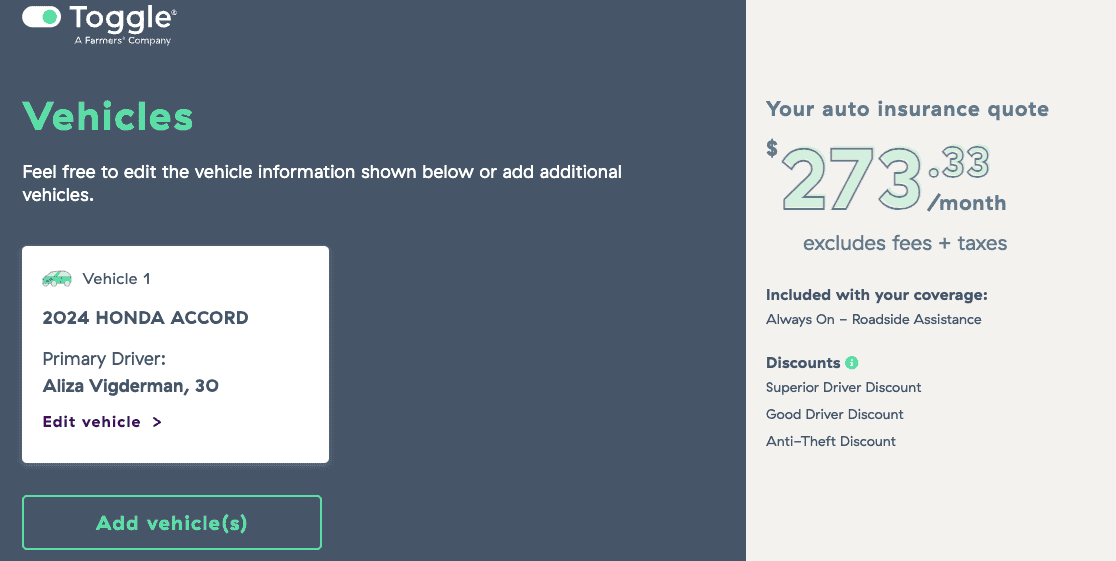
Toggle offers the standard car insurance coverages: bodily injury and property damage liability, uninsured/underinsured motorist, collision, comprehensive, additional equipment, and rental reimbursement/alternative transportation coverage. It also includes roadside assistance with each policy.
Toggle now also provides rideshare coverage. This insurance is essential for drivers who work with companies like Uber or Lyft to cover gaps in their personal auto policies.
So what’s missing? Toggle doesn’t offer non-owner insurance or SR-22s. Non-owner insurance is a good idea if you frequently borrow or rent cars, including carshares like Zipcar. An SR-22 is a form required after certain serious driving offenses, like DUIs, proving that drivers meet state-mandated insurance requirements. If you need any of these specialized coverages, you’ll need to explore other insurers that cater to those specific needs.
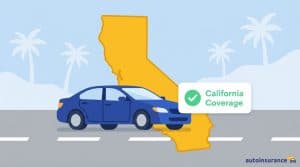
Note that Toggle is only available in 14 states, as of writing. These are:
- Arizona
- California
- Colorado
- Georgia
- Illinois
- Indiana
- Missouri
- Ohio
- Oregon
- South Carolina
- Tennessee
- Texas
- Virginia
- Wisconsin
Toggle also offers renters insurance — in fact, this is its primary insurance product — and I could have gotten a discount for bundling renters and auto. Some landlords require basic renters insurance, but there are also two higher tiers for more coverage, like an expensive laptop or piece of jewelry. There is also an add-on for pets, because who knows when your dog will damage the carpet.
Renters insurance is much cheaper than auto insurance; I got quoted for as little as $5 a month.
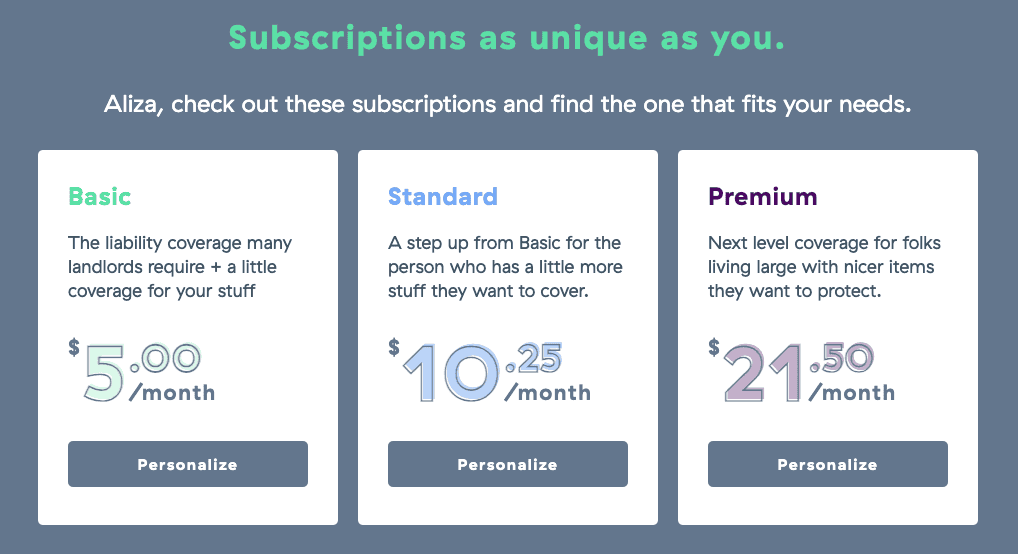
Let’s take the lowest-tier plan, which includes a deductible of up to $500 and a liability limit of $100,000. I could have customized my policy, adding coverage for:
- Up to $10,000 for technology, jewelry and fashion, cameras, art supplies, and other creative tools, active gear and equipment, and collectibles
- Up to $20,000 for furniture and appliances
In general, I think it makes sense to increase your coverage above the minimum. It usually doesn’t add too much to your premiums, and in the event of a worst case scenario, like a fire, the expense of replacing your belongings adds up quickly.
Once I chose the limits I wanted for each category, I had a few add-ons to choose from:
- Identity theft: While not technically renters insurance, identity theft monitoring will let you know if your personal data was leaked.
- Pets: If you have a pet, this coverage would go to any damages they make to your rental home.
- Replacement: Some people may prefer to replace rather than repair items.
- Side hustle: Didn’t think Toggle was targeted at millennials before? You will now. If you’re part of the majority of the country that has a side hustle, you can get insurance for your business expenses like a camera or other equipment.
- Significant other: Add your spouse or partner to your renters insurance, whether you’re married or just live in the same house, for free.
- Temporary living: If you need to stay somewhere else while you’re experiencing a covered loss, this coverage will contribute to your hotel bill.

 866-589-5339
 3.4/5