
 866-589-5339





How to Cancel Your Car Insurance Policy (Step-by-Step Guide)
You cancel your car insurance policy by contacting your insurer by phone, through your agent, or an online portal. Make sure you have a new policy lined up before canceling.

Get quotes from providers in your area


Last updated: July 23, 2026
Key Takeaways: How to Cancel Your Car Insurance Policy
Cancel formally and in writing only after your new policy is active to avoid coverage gaps and rate hikes.
Line up new coverage first, then cancel your old policy in writing to avoid a lapse in coverage.
You’re typically owed a pro-rated refund for unused premium, issued within a couple of weeks.
Simply stopping payments instead of formally canceling can trigger a costly non-payment cancellation on your record.
Selling your car? A non-owner policy keeps your insurance history continuous and avoids coverage lapses.

Find out if you're overpaying for auto insurance.
See how much you could be saving! Let's get started by entering your ZIP Code:
Whether you’re switching to a better rate, selling your car, moving out of state, or simply don’t need coverage anymore, canceling your car insurance policy is usually a simple process. But doing it the wrong way can cost you money, create a gap in coverage, or even hurt your ability to get affordable insurance in the future.
Here’s exactly how to cancel your policy the right way.
Before You Cancel: Key Things to Check
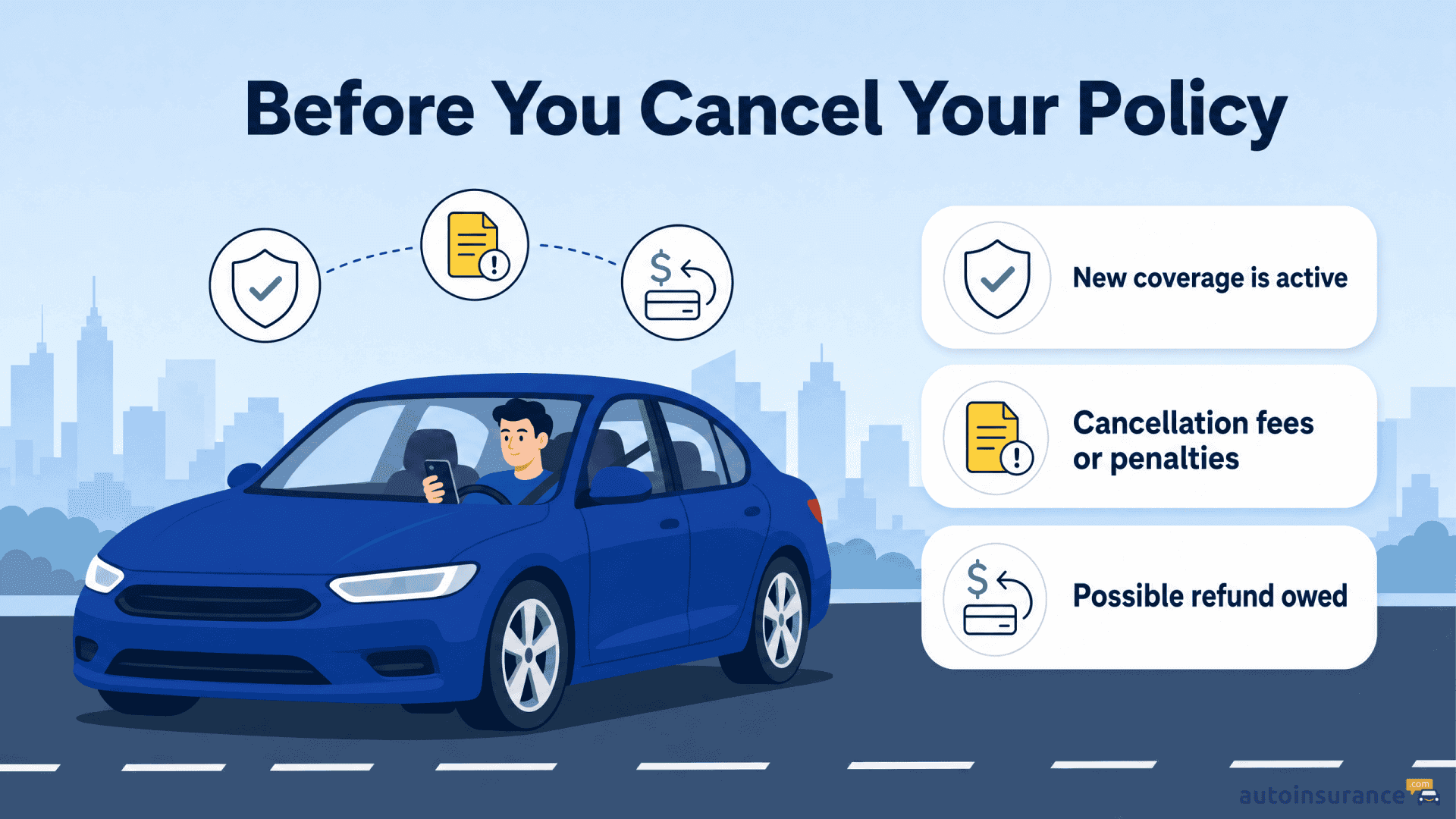
Review these three critical factors before you cancel your current auto insurance policy to avoid financial and legal issues.
Before you contact your insurance company, run through the following:
- Make sure your new coverage is active. Even a short lapse in coverage can raise your future premiums and, in most states, is illegal if you still own and drive a car.
- Check for cancellation fees or penalties. Some insurers charge a fee for canceling mid-term, especially if you paid for a policy in full upfront.
- Find out if you’re due a refund. If you’ve paid for coverage you won’t use, typically entitled to a pro-rated refund.
Step-by-Step: How to Cancel
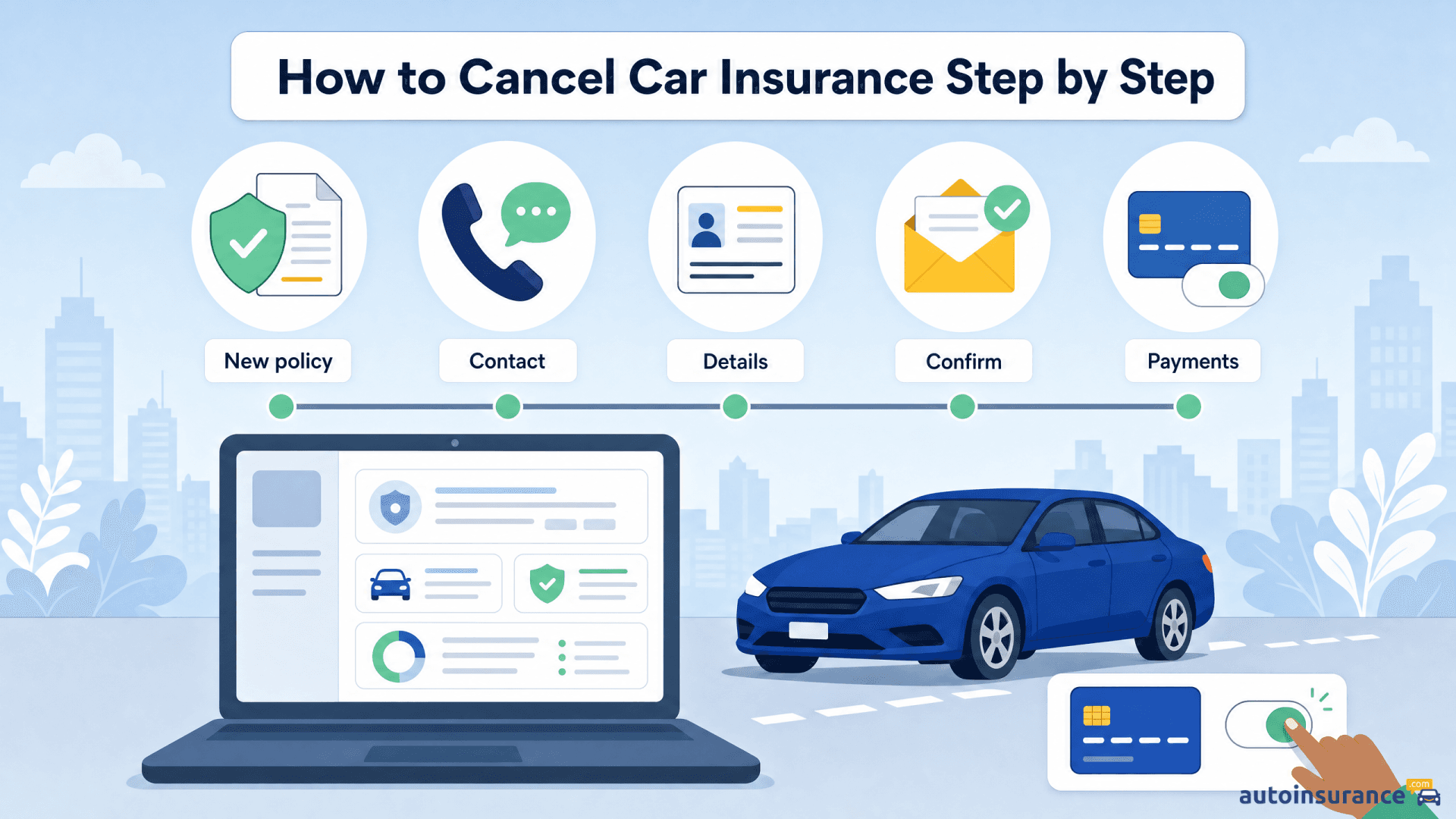
Follow these five steps to ensure a smooth transition when cancelling your current car insurance policy.
Step 1: Line up your new insurance first. If you’re switching providers, make sure your new policy has an official start date before you cancel the old one. This avoids any gap in coverage.
Step 2: Contact your current insurer. Most insurers let you cancel by phone, through their online portal, or through your agent. Phone or written requests are usually the safest, since they create a clear record.
Step 3: Provide the required information. Be ready to share your policy number, the exact date you want coverage to end, and your reason for canceling (this is often optional, but some insurers ask).
Step 4: Get written confirmation. Ask for an email or letter confirming your cancellation date. Keep this on file in case any billing disputes come up later.
Step 5: Update or cancel your automatic payments. If you have auto-pay set up, make sure it’s turned off so you’re not charged after your cancellation date.
TIP
Some insurers offer advance quote discounts for purchasing a policy in advance of the start date, typically by at least 7 to 30 days.
What Happens to Unused Premium?
If you cancel before your policy term ends, you’re generally owed a pro-rated refund for the coverage you paid for but didn’t use. For example, if you paid for six months of coverage and cancel after three, you should get roughly half of that premium back.
Refunds are usually issued as a check or credited back to your original payment method, and most insurers process them within a couple of weeks, though it can take longer depending on the company.
Special Situations
Selling your car
If you’re selling your vehicle and won’t be driving for a while, consider a non-owner car insurance policy instead. It’s inexpensive, keeps your insurance history continuous, and helps you avoid a coverage lapse — which insurers often treat as a red flag and use to justify higher premiums when you’re ready to insure a car again.
Moving out of state
If you move to a new state, you need to cancel your current policy and start one with an insurer in your new state, even if it’s the same company. That’s because each state has its own minimum coverage limits and regulations. Moving states is a good opportunity to shop around for a new policy.
Outstanding loan or lease
If your car is financed or leased, your lender likely requires you to carry full coverage until the loan is paid off. Check with your lender before canceling or reducing coverage.
Multi-car or bundled policies
If your auto policy is bundled with home, renters, or another vehicle, canceling one piece may affect your bundle discount or the terms of the remaining policies. Ask your insurer how cancellation will impact the rest of your coverage. Your new insurer can also walk you through the steps to cancel home insurance and re-bundle if you choose.
STATS:
According to an AutoInsurance.com survey, over a quarter of drivers have switched car insurance companies due to rising costs, and two-thirds are considering switching.
Common Mistakes to Avoid
- Letting your coverage lapse. Even a short gap can lead to higher premiums down the road.
- Canceling before your new policy starts. Always confirm the new policy’s start date first.
- Not getting cancellation in writing. Verbal confirmation isn’t enough if a billing issue comes up later.
- Forgetting to cancel auto-pay. You could be charged even after your policy ends.
- Just stopping premium payments instead of formally canceling. This is one of the most common — and costly — mistakes. Simply letting your policy lapse by not paying can result in a non-payment cancellation on your record, which typically looks worse to future insurers than a voluntary cancellation. It can also lead to late fees, a referral to collections, and make it harder (or more expensive) to get a new policy later. Always cancel formally, even if you’re done making payments.
Bottom Line
Canceling your car insurance policy is easy as long as you do it in the right order: line up new coverage first, cancel formally and in writing, and follow up to make sure your auto-pay is off and any refund is processed. Skipping these steps — especially simply stopping payments — can end up costing you more than the policy itself.
Ready to switch? Compare quotes from top insurers before you cancel your current policy to make sure you’re getting the best rate for your next one.
Frequently Asked Questions
No, canceling car insurance won’t affect your credit score. However, a lapse in coverage or a non-payment cancellation can raise red flags for future insurers and lead to higher premiums.
In most cases yes, but it depends on your insurer and state. Some charge a short-rate cancellation fee for ending a policy early, while others don’t. Check your policy documents or ask your insurer directly.
Most insurers don’t require advance notice to cancel, but it’s a good idea to give a few days’ notice to make sure the cancellation date lines up correctly with your new policy.
If you won’t be driving for a while but still own a car, ask about a non-owner policy or, in some cases, a temporary reduction in coverage rather than a full cancellation.
Citations
What’s the difference between auto policy cancellation and nonrenewal? Insurance Information Institute. (2022).
https://www.iii.org/article/whats-the-difference-between-auto-policy-cancellation-and-nonrenewalHow to Cancel Your GEICO Car Insurance Policy. Geico. (2022).
https://www.geico.com/information/faq/cancel-insurance/
Related Articles
What happens if my car insurance policy lapses?
August 5, 2026
How to Refinance a Car Loan: A Step-by-Step Guide
July 15, 2026