
 866-589-5339




Child Passenger Safety: Car Seat Guidelines, Laws, and Safety Tips
Using the right child safety restraint is crucial to protecting young passengers in the event of a car crash.
Get quotes from providers in your area

Discover rates as low as $24 /month


Last updated: September 21, 2026
Key Takeaways: Child Passenger Safety
The appropriate safety restraint for children riding in a vehicle should be determined by their size and manufacturer guidelines, not just their age.
Of the child passenger vehicle occupants who were killed in car accidents in 2024 and whose restraint use was known, 39 percent were unrestrained at the time of the crash.
State laws establish minimum requirements around child safety restraints, but they may differ from safety recommendations.
Certified Child Passenger Safety (CPS) Technicians are available in communities nationwide to check car seat installations and teach proper installation and safety techniques.
Car crashes are a leading cause of injury and death among children, making proper passenger safety an important responsibility for parents and caregivers. All 50 states and Washington, D.C., have child restraint laws, though they vary. Car seats and booster seats can greatly reduce the risk of serious injury or death in a crash.
This guide explains the basics of child passenger safety, including car seat recommendations, state laws, and where to get a car seat installation inspected.
What Is Child Passenger Safety?
Child passenger safety refers to the practices and equipment used to protect children while they are traveling in a vehicle. It involves choosing an age- and size-appropriate car seat or booster seat, installing it correctly, and transitioning children to the next type of restraint when they outgrow their current one.
Child passenger safety also includes proper seat-belt use and having children ride in the back seat until they reach a safe age and size to sit in the front seat. State laws set minimum requirements for child restraints based on age, height, weight, or other factors, but safety experts are generally more conservative in their recommendations than the state minimums.
Child Passenger Safety Statistics
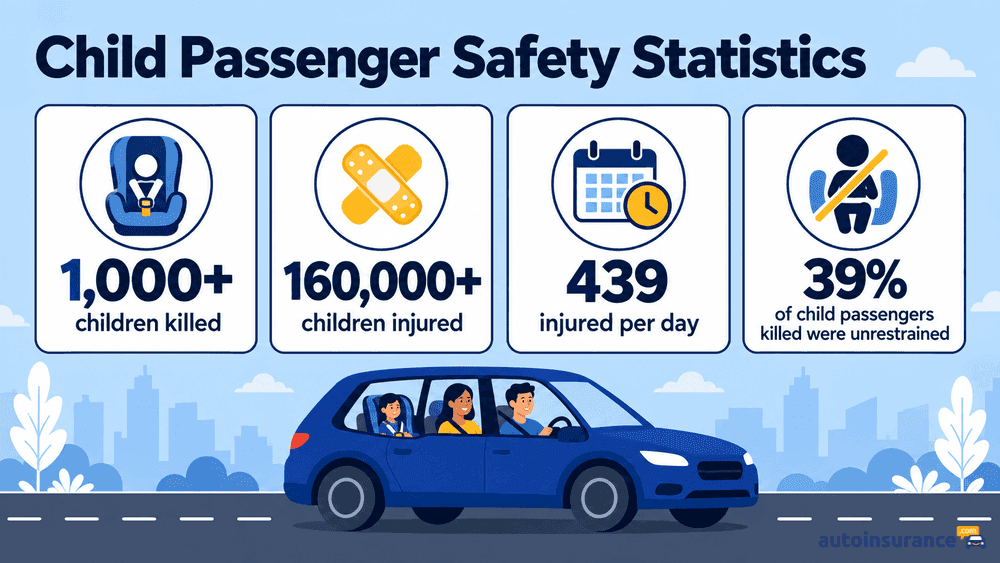
Thousands of children are killed or injured in traffic crashes each year, and proper restraint use can significantly reduce the risk of serious injury or death.
According to the latest data from the NHTSA, over 1,000 children aged 14 and younger were killed in traffic accidents in 2024, which represents 3 percent of the total traffic fatalities that year. Over 160,000 children were injured — that’s an average of 439 children injured in traffic crashes per day.1
Of the children killed in traffic accidents in 2024, 76 percent were vehicle occupants, 17 percent were pedestrians, and 5 percent were cyclists. More than a third (39 percent) of children who were killed while passengers in a vehicle (and whose restraint use was known) were unrestrained at the time of the crash. Of the child passenger vehicle occupants who survived fatal crashes, only 12 percent were unrestrained.
Child traffic fatalities in 2024 increased by 1 percent from 2023 but decreased by 10 percent from 2015. The largest decrease was for children three and under, while fatalities of children in the 13–14 age group actually increased by 19 percent.
Child Passenger Safety Laws by State
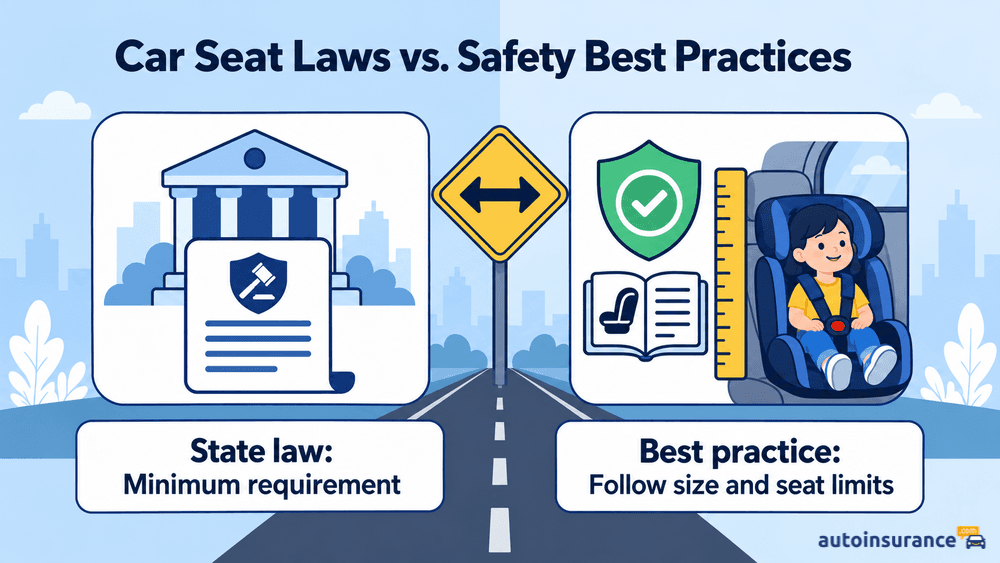
State laws establish minimum child-restraint requirements, while safety recommendations may call for longer use based on a child’s size and the seat’s limits.
Every state and Washington, D.C., requires child restraints for young children, but requirements regarding age, height, weight, and restraint type vary. Because of these inconsistencies across states, legal minimums aren’t necessarily the same as best-practice safety recommendations.
Child restraint laws are separate from seat belt use laws, which may or may not cover children, depending on the state. For example, Florida’s seat belt law applies to those ages 6 and older, and its child restraint law applies only to those ages 5 and younger. Meanwhile, Colorado’s child restraint law applies to minors up to age 18.2
Here is a high-level overview of state laws regulating child passenger restraints:
- Rear-facing: Twenty-five states and Washington, D.C., require rear-facing car seats until at least age 2. Another six states require them until around age 1, while 19 states have no law regarding rear-facing car seats.
- Rear seat: Louisiana, Michigan, Minnesota, Vermont, and Washington require kids 12 and under to ride in the back when a rear seat is available. In several states, this requirement is only for kids up to 7, 8, or 11 years old. Many states have no preference for rear seat placement.
- Moving to a seat belt: The age at which a child can legally transition from a safety seat to a regular seat belt varies widely by state. Many states have weight and/or height requirements in addition to age guidelines.
- Penalties: Fines for breaking child restraint laws also vary widely by state. Delaware gives no fine for a first offense and instead provides a referral to a car seat fitting station. On the other end of the spectrum, Nevada’s maximum base fine is $500.
State child restraint laws, like minimum insurance coverage laws, provide baseline requirements, but they don’t necessarily reflect best practices. For example, the American Academy of Pediatrics recommends that all children younger than 13 ride in the back seat,3 but fewer than half of states include a preference for rear seating in their child restraint laws.
GOOD TO KNOW:
The law of the state you’re driving in applies, so families on road trips should check that their child restraints are acceptable before crossing state lines.
Car Seat Guidelines by Age and Size

Children should progress through the four restraint stages according to their size and the seat manufacturer’s limits rather than age alone.
Children who are passengers in vehicles should always use a car seat or booster seat that is appropriate for their age, height, weight, and developmental stage. As children grow, they move through four main stages of restraints: rear-facing car seats, forward-facing car seats, booster seats, and, eventually, adult seat belts.
The timing of these transitions depends on the child’s size and the limits of the restraint, rather than age alone. Here’s when to consider each type of restraint and what to look for when determining whether your child is ready to move to the next stage.
Stage 1: Rear-Facing Car Seats
Infants and toddlers should ride in a rear-facing car seat for as long as possible, until they reach the maximum height or weight allowed by the seat’s manufacturer. Infants should be put in a rear-facing car seat starting with their ride home from the hospital (or first car ride).
Some car seats can be converted from rear-facing to forward-facing, and they usually have higher limits than rear-facing-only seats, often allowing for rear-facing use for two years or longer. If a child outgrows an infant-only seat, a convertible seat can allow them to continue riding rear-facing.
Age can help determine which type of seat to consider, but the manufacturer’s height and weight limits ultimately determine when a child has outgrown a particular seat.
Stage 2: Forward-Facing Car Seats
Once a child has outgrown their rear-facing seat based on the manufacturer’s height and weight guidelines, they should transition to a forward-facing car seat with a harness and tether. Again, they should continue using this seat for as long as possible, until they reach the manufacturer’s maximum height and weight — usually around 65 pounds.
Combination car seats can be used with a harness before being converted to a booster later on. It’s crucial to ensure that the car seat is correctly installed based on both the car seat and vehicle manufacturer’s instructions.
Stage 3: Booster Seat
Children whose height and/or weight exceed their forward-facing car seat’s limits can move on to using a booster seat. Booster seats are used to ensure that the seat belt is correctly positioned across the child’s body. Children should continue using a booster until they can safely use a seat belt without one.
A seat belt is properly positioned when the lap belt lies across the upper thighs and not over the stomach, and the shoulder belt rests across the shoulder and chest. Children can usually stop using a booster seat when they reach about 4 feet 9 inches tall, which usually occurs between ages 8 and 12.
However, age is just a reference point — if the seat belt does not fit properly, the child should continue using a booster regardless of age.
Stage 4: Seat Belt
Once a child can sit with the vehicle’s seat belt positioned correctly, they can stop using a booster. However, they should continue riding in the back seat whenever possible. The American Academy of Pediatrics recommends that children younger than 13 ride in the back seat. One of the reasons for this is that front-seat airbags are designed to protect adult-sized occupants and can cause serious injuries to smaller children when they deploy during a crash.
TIP:
You can find detailed car seat and booster seat installation guides from the NHTSA.4
When Should a Child Move to the Next Car Seat?
Age can be a useful benchmark for thinking about a child’s transition through different types of car seats, but it should not be used as the deciding factor. Instead, safety guidelines recommend using the height and weight limits of the current restraint and following the manufacturer’s instructions.
Here is an overview of when children should move through restraint stages for maximum safety.
| Stage | General Guidance |
|---|---|
| Rear-facing car seat | From birth until the child reaches the seat’s maximum rear-facing height or weight |
| Forward-facing car seat | After outgrowing rear-facing limits, until the child reaches the forward-facing seat’s limits |
| Booster seat | After outgrowing a forward-facing harness, until the vehicle seat belt fits properly |
| Seat belt | When the child can maintain a proper seat-belt fit without a booster |
Where to Get a Car Seat Inspection
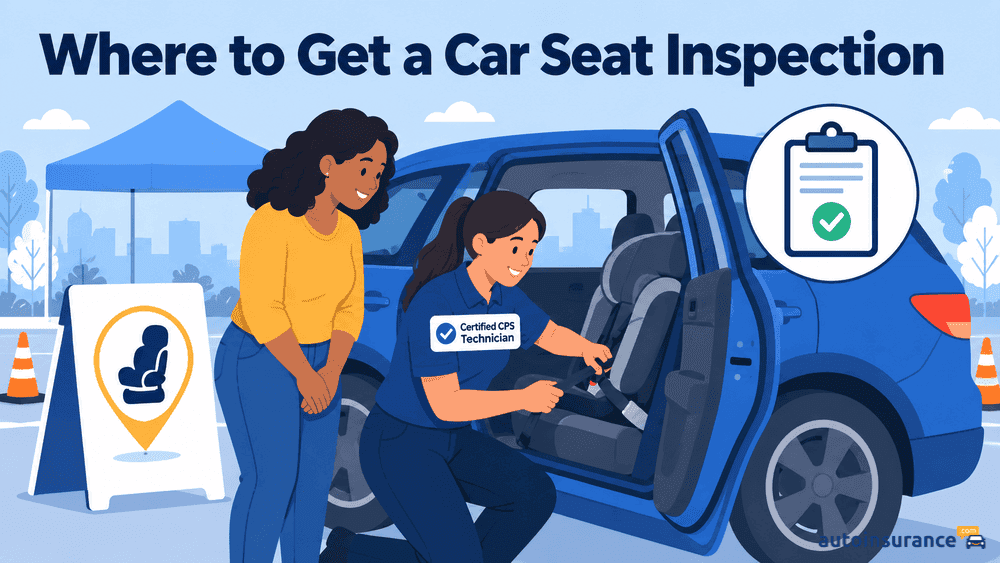
Certified Child Passenger Safety Technicians can check car-seat installations and teach caregivers how to secure children properly.
Even if you follow the manufacturer’s instructions, installing a car seat correctly can be tricky. Parents can have their car seat installation checked by a Certified Child Passenger Safety (CPS) Technician, who is trained to help families choose and correctly install an appropriate restraint.
The NHTSA maintains a database of car seat inspection stations and events where parents and caregivers can find certified technicians.5 Some locations offer appointments, while others hold periodic inspection events. Safe Kids Worldwide can also help you find a CPS technician in your community.6
Ideally, you should bring the child and vehicle that will be using the car seat along to the inspection. A technician can check the installation and demonstrate how to properly secure the child in the seat. Parents should also register their car seat with the manufacturer so they can receive recall and safety notifications.
Recap
Using the appropriate restraint for a child’s age and size and installing it correctly are key to keeping young passengers safer on the road. Children should remain in each restraint stage until they reach the seat’s size limits and be properly secured every time they ride.
State laws provide baseline requirements for child safety restraints, but safety recommendations may call for longer use of certain restraints. When in doubt, parents and caregivers can consult the manufacturer’s instructions or have a car seat checked by a Certified Child Passenger Safety Technician.
Frequently Asked Questions
Legally, a 12-year-old can sit in the front seat in some circumstances, depending on state law. However, the American Academy of Pediatrics recommends that children younger than 13 ride in the back seat. If a 12-year-old must ride in the front seat, they should be properly restrained with a seat belt that fits correctly, sit upright against the seatback, and have the passenger seat moved as far back from the dashboard as possible.
Whether a 7-year-old needs a car seat depends on the state and, more importantly, on the child’s height. Most states require a booster or other restraint until a child reaches about 4 feet 9 inches, which more children reach between ages 8 and 12. However, even where the law allows a seat belt alone, the AAP and NHTSA recommend keeping kids in a booster until the belt fits properly, which usually happens when they reach about 4 feet 9 inches tall.
Becoming a Child Passenger Safety Technician (CPST) costs $95 for the national registration fee, but there may also be additional local course fees to take into account. There is also a $55 recertification fee every two years.
The most unsafe seat in a car is the front passenger seat, especially for children, because it’s closest to the point of impact in a frontal crash and exposes occupants to airbag deployment forces.
Citations
2024 Children Traffic Safety Facts. National Highway Traffic Safety Administration (NHTSA). (2026).
https://crashstats.nhtsa.dot.gov/Api/Public/ViewPublication/813811Seat belt and child seat laws. Insurance Institute for Highway Safety (IIHS). (2026, Sep).
https://www.iihs.org/research-areas/seat-belts/seat-belt-law-tableChild Passenger Safety. American Academy of Pediatrics. (2018, Nov 1).
https://publications.aap.org/pediatrics/article/142/5/e20182460/38530/Child-Passenger-SafetyCar Seats and Booster Seats. National Highway Traffic Safety Administration (NHTSA). (2026).
https://www.nhtsa.gov/vehicle-safety/car-seats-and-booster-seats#car-seat-installation-instructionsCar Seats and Booster Seats. National Highway Traffic Safety Administration (NHTSA). (2026).
https://www.nhtsa.gov/vehicle-safety/car-seats-and-booster-seats#car-seat-inspectionGet a Car Seat Checked. National CPS Certification / Safe Kids Worldwide. (2026).
https://cert.safekids.org/get-car-seat-checked
Related Articles

Car Crash Statistics 2026
August 13, 2026
Hot Car Safety Facts and Statistics
March 27, 2026
Guide to Car Insurance in Hawaii
May 1, 2026