
 866-589-5339




What Drivers Need to Know About Flock Cameras and Car Insurance
AI-powered surveillance devices like Flock cameras are becoming commonplace and provide data that may be used by car insurance companies.
Get quotes from providers in your area

Discover rates as low as $24 /month

Last updated: October 5, 2026
Key Takeaways: Flock Cameras and Car Insurance
AI-powered surveillance devices like Flock cameras are becoming commonplace and provide data that may be used by car insurance companies.
Flock cameras and other similar devices are automated license plate readers (ALPR), which use AI to identify and analyze vehicle data.
Certain AI-powered ALPR systems, including DRN, may be used by insurance companies to verify vehicle information or assess claims.
ALPR systems can lead to errors, and it’s important for consumers to be informed about how their information and data may be collected and used by insurers.
What Are Flock Cameras?
Flock cameras are a type of AI-powered surveillance camera referred to as automated license plate readers (ALPR). They are produced by Flock Safety, one of the major providers of ALPR systems in the U.S. Other companies in the vehicle-location and ALPR space include Motorola Solutions and its Digital Recognition Network (DRN).
GOOD TO KNOW:
Flock and DRN differ in how they make vehicle data available to third parties. Flock usually leaves control of data with the organization operating the camera, including law enforcement agencies, which can choose whether to share it (many do). On the other hand, DRN aggregates data from its camera network into a centralized database that commercial clients can access for a fee.
ALPR systems use computer vision and machine learning to automatically analyze images captured by cameras and identify information about vehicles, including license plates, vehicle make and model, color, and other identifying characteristics like bumper stickers or roof racks. Flock also offers an AI-powered search tool that allows authorized users to search for vehicles using text descriptions like “white pickup truck.”
Flock cameras and similar ALPR systems are used by various organizations across the country, including law enforcement agencies, homeowner associations, and private businesses.
Flock Cameras vs. Traffic Cameras
Both traditional traffic cameras and Flock cameras surveil roadways and record data, but they serve different general purposes.
Traditional traffic cameras are primarily used to monitor traffic conditions or issue speeding citations, and specialized cameras may also be used for purposes such as speed or red-light enforcement. Meanwhile, Flock’s ALPR cameras are specifically designed to identify and track vehicles based on their license plates and other characteristics.
For example, a traditional traffic camera might capture a video of a crash that can later be reviewed to determine what happened. Standard Flock cameras do not capture continuous video, but rather they capture images that are processed into searchable vehicle information, creating a record of when and where a particular vehicle was detected and characteristics associated with it.
How Can AI-Powered Cameras Impact Car Insurance?
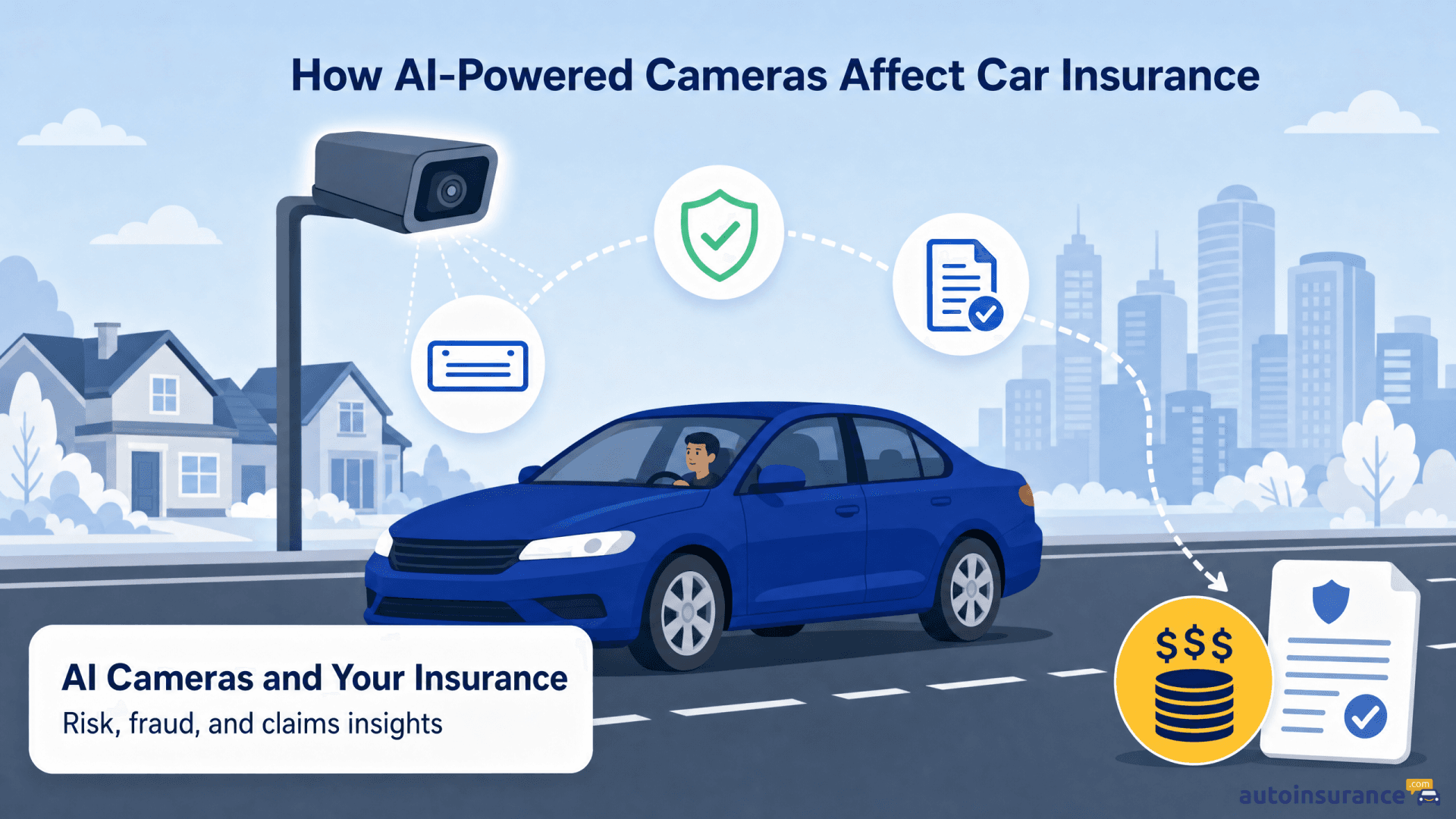
AI powered cameras collect vehicle data that can influence insurance risk assessment and claims processing.
One of the most notable recent connections between Flock cameras and auto insurance comes from Texas, where an insurance-related fee introduced in 2023 has helped fund the installation of over 3,000 Flock cameras across the state.1
The fee was created to help combat vehicle-related crimes such as catalytic converter theft, rather than specifically to fund surveillance cameras. However, its use to fund Flock cameras illustrates an unexpected connection between auto insurance and the growing use of ALPRs.
That said, paying an insurance-related fee that helps fund Flock cameras is not the same as having your individual insurance rate determined by Flock camera data. There is currently no clear evidence that insurers use Flock data specifically to set individual premiums, which is likely due to the fact that it’s not necessarily readily available to insurers.
Other ALPR companies have a more direct relationship with the insurance industry. DRN, for example, markets vehicle-location and other data services to insurers that can be used to help assess risk and investigate potential fraud.2 Depending on how the information is used, it may also factor into underwriting or policy pricing.
AI-powered cameras and ALPR systems can also provide information that insurers use to investigate claims and verify vehicle details. The extent to which insurers can access or use this information varies depending on the system and the data available to them.
Monitoring garaging address
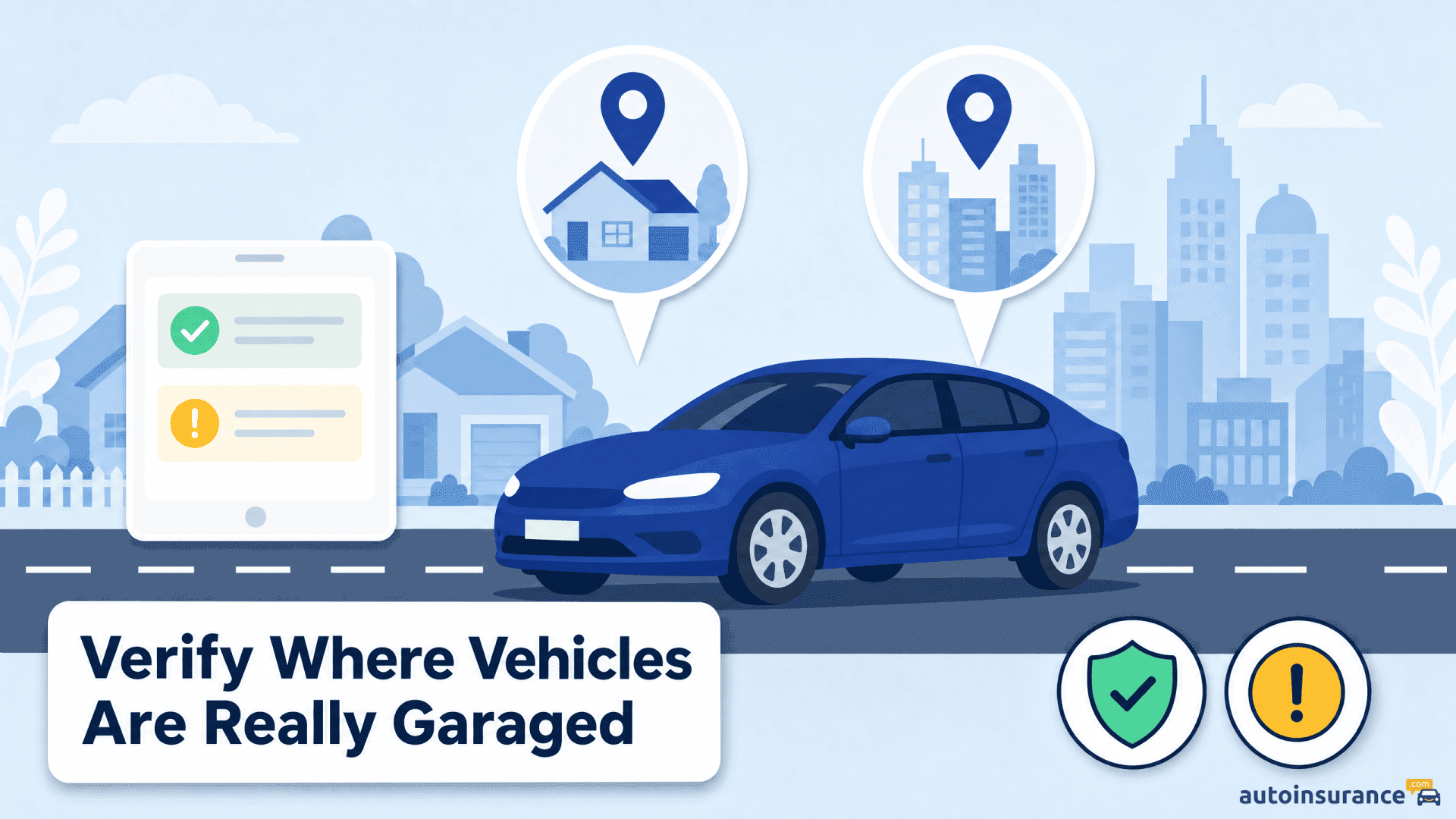
Insurers use location data to verify if a vehicle is parked where the policyholder claims.
One of DRN’s advertised services is Garage Aware, which allows users to identify locations where a specific vehicle appears to be regularly garaged and potentially identify discrepancies with the address reported by a policyholder.3 This may include a vehicle being regularly garaged in an area with higher insurance rates without disclosing it.
DRN says this information can be checked even before a policy is issued if the insurance company submits the customer’s VIN or license plate to DRN for verification. The company also suggests that insurers make this a regular part of their process before renewing policies.
The information can give insurers another way to verify details provided by policyholders and identify potential underwriting or fraud concerns. However, drivers should be aware of what information and data insurers can obtain, how it is collected, and how it may be used when evaluating an insurance policy.
Detecting commercial use
Garaging patterns, in addition to photographs captured by AI-powered cameras, can also help identify when a vehicle is being used for unauthorized commercial purposes. For example, DRN photos can show if vehicles have signage, ladders, trailers, or other identifiers that may indicate the vehicle is being used commercially, which requires a commercial policy.
Its Radius Response product also uses license plate data to check if a vehicle is regularly operating outside its designated radius, which presents a risk to insurers. This information can help insurers generate more accurate quotes, inform policy renewal decisions, and identify policyholders who may be misrepresenting where their vehicles are primarily driven to obtain lower premiums.
Assisting claims processing
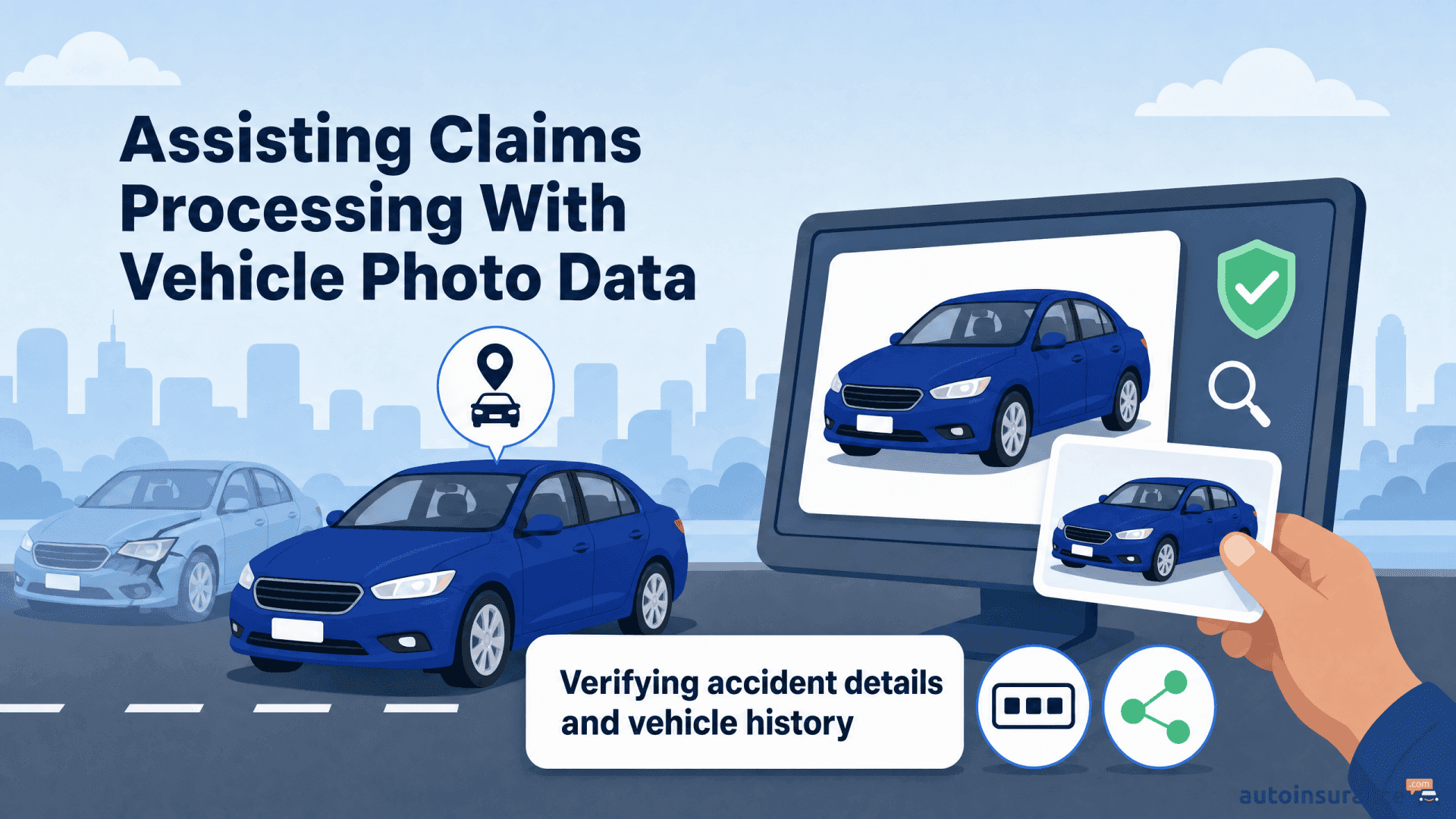
Insurance companies use vehicle photo data and location information to verify claims and investigate potential fraud.
The photos of vehicles detected by DRN cameras can also be used in claims investigations, along with vehicle location data. Insurance companies may use this information to verify a vehicle’s location around the time of an accident or other covered event and compare it with the details provided in a claim.
Photo evidence may also help insurers verify the condition of a vehicle before the reported damage occurred, potentially making it easier to identify inconsistencies or investigate suspected fraud. In addition, license plate and address searches using ALPR data can help investigators identify vehicles that appear in multiple claims or may be linked to other vehicles, people, or locations relevant to an investigation.
Investigating vehicle theft
Stolen vehicle claims are perhaps one of the most obvious use cases for ALPR technology. For example, DRN can provide alerts to insurers when a flagged license plate is detected within a specified coverage area. This information can help law enforcement with vehicle recovery efforts and may also help insurers investigate and resolve theft claims more efficiently.
ALPR data may also be useful if a stolen vehicle is recovered. Photos and location records can provide insurers with additional information about where and when the vehicle was detected after the theft was reported, as well as any damage incurred, which can help with the subsequent claims investigation.
Limitations of ALPR Data
DRN notes that its vehicle location and photographic data can be used as “an irrefutable record of where a vehicle has been sighted.”4 However, a camera detection does not necessarily establish what happened or who was responsible for an incident, and both the technology and the people interpreting its data can make mistakes. The Institute for Justice has recorded at least 27 cases since 2018 in which ALPR cameras misread license plates and contributed to wrongful law enforcement actions.5
The consequences of an inaccurate ALPR record may be different in an insurance investigation than in a law enforcement encounter, but the same limitations are relevant as insurers and other organizations increasingly rely on AI-powered cameras and vehicle-location data. Questions about oversight and regulation are likely to remain part of the broader discussion as consumers and legislators call for additional safeguards.6
Recap
AI-powered cameras and ALPR systems are frequently making headlines due to their increasing use by law enforcement and the privacy concerns they raise, despite also presenting potential benefits. They are also becoming increasingly connected to the auto insurance industry, from helping insurers verify garaging addresses and identify potential commercial use to investigating claims and recovering stolen vehicles.
While Flock cameras currently have more limited use cases in insurance due to their data use model, other vehicle-data companies such as DRN market ALPR data directly to insurers for underwriting, renewals, and fraud investigations. As these technologies become more widely used, the accuracy of the data, how insurers use it, and the safeguards surrounding it will remain important considerations for policyholders.
Frequently Asked Questions
Flock cameras do not directly detect if a vehicle has valid car insurance. However, their alerts may be based on information from other databases or systems accessible to law enforcement, potentially including insurance-related information, depending on the jurisdiction.
Generally, insurance companies do not check Flock cameras, as they do not have direct access to the data. Flock leaves control of data with the organization operating the camera, which determines whether and with whom it is shared. However, similar companies such as Digital Recognition Network (DRN) provide vehicle-location and ALPR data to commercial clients, including insurance companies
The organization purchasing or operating the Flock camera system would make the decision to install Flock cameras. Flock will work with the customer to determine appropriate camera locations. The approval process can vary depending on whether the cameras are being installed by law enforcement, a local government, an HOA, or a private business.
Flock cameras use AI-powered computer vision to read license plates and identify vehicle characteristics such as make, model, color, and body type. They can also record distinguishing features such as roof racks or bumper stickers, allowing vehicles to be identified even when a license plate isn’t clearly visible.
Citations
Lawmakers added $1 to Texans’ car insurance policies. That money paid for thousands of Flock cameras.. The Texas Tribune. (2026, Aug 28).
https://www.texastribune.org/2026/08/28/texas-flock-cameras-auto-insurance-fee-mvcpa-grants/Insurance. DRN Data.
https://drndata.com/insurance/Garage Aware. DRN Data.
https://drndata.com/garage-aware/Event Links. DRN Data.
https://drndata.com/event-links/Dozens of Innocent Motorists Have Been Pulled Over, Detained at Gunpoint, or Jailed Due to AI License Plate Camera Errors. Institute for Justice.
https://ij.org/dozens-of-innocent-motorists-have-been-pulled-over-detained-at-gunpoint-or-jailed-due-to-ai-license-plate-camera-errors/Michigan lawmakers propose Flock camera regulations amid growing debate over privacy, misuse. WXYZ 7 News Detroit. (2026, Sep 25).
https://www.wxyz.com/news/michigan-lawmakers-propose-flock-camera-regulations-amid-growing-debate-over-privacy-misuse
Related Articles
What To Know About Photo Estimates for Car Insurance Claims
October 20, 2025