
 866-589-5339




What happens if my car insurance policy lapses?
A lapse in your car insurance policy can result in financial and legal risks as well as higher insurance rates.
Get quotes from providers in your area

Discover rates as low as $24 /month

Last updated: August 5, 2026
Key Takeaways: What Happens When a Policy Lapses
Having a lapse in car insurance coverage will likely result in higher premiums as insurers consider it a sign of higher risk.
A car insurance lapse can occur if your policy is cancelled due to nonpayment, a severe violation, or a switch in providers without another one lined up.
A car insurance lapse raises your annual rates by an average of 8% to 10% (about $200/year) for a short gap under 30 days, and up to 35% or more (over $800/year) for a gap lasting 31 days or longer.
Driving with a lapsed policy opens you up to financial and legal risks if you’re involved in an accident.
Reinstating your policy or purchasing a new one as soon as possible after a lapse can help lessen its impact on your insurance history.
Most people haven't compared rates in over a year.
Rates change constantly. A quick comparison takes 2 minutes and could put hundreds of dollars back in your pocket.
What Is a Car Insurance Lapse?
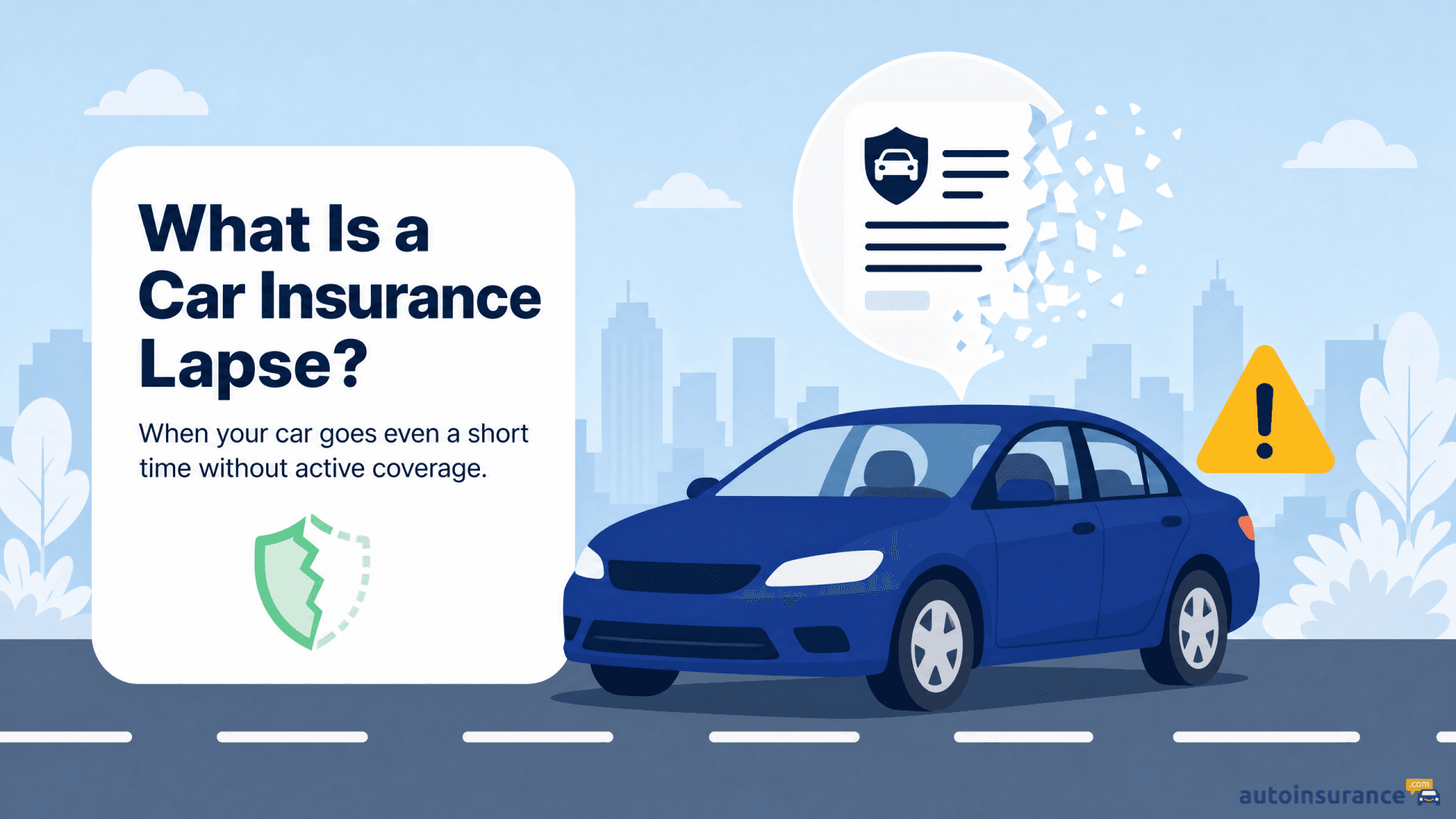
A car insurance lapse occurs when a vehicle remains without active insurance coverage for any period.
A car insurance lapse occurs during any period of time that your vehicle goes without an active car insurance policy, even just a day. This can happen if your policy is cancelled for any reason, including lack of payment, or if you forget to transfer a policy to a new vehicle.
Common Reasons for an Insurance Lapse
There are several reasons your insurance policy may lapse, but it is usually avoidable. Being aware of the common causes can help ensure you maintain continuous coverage and avoid any negative consequences from a lapse.
- Missed payments: If you miss a premium payment due date, your insurer should provide a grace period of between 10 and 30 days. If you still don’t make a payment within that window, your coverage may be cancelled.
- Non-renewal: Most auto policies are set to auto-renew, but not all are. If you miss a notice of non-renewal or forget to make the payment, your coverage will expire at the end of the policy term.
- Not overlapping policies when switching insurers: Whenever you switch from one provider to another, it’s important to make sure you don’t cancel your current one until your new one takes effect to avoid an unintended gap in coverage. It’s wise to overlap them by at least a day to be safe.
- Policy cancelled by insurer: Your insurer may cancel your policy for several reasons beyond nonpayment of premiums, including if your license is suspended due to violations or you misrepresented information on your application. If this happens before you can get another policy set up, you’ll have a lapse in coverage.
- Billing or contact information changes: If any of the contact or billing information you have on file with your insurer changes but you forget to update it, there’s a chance you’ll miss payment or renewal notices. Keeping your contact and billing information up to date can help prevent an accidental lapse in coverage.
FYI
Your insurance company must send you notice, either by mail or electronically, before cancelling your policy.
What Happens if Car Insurance Lapses?
Letting your car insurance lapse results in various risks and both legal and financial consequences. The exact penalties vary by state, but even a brief gap in coverage can make it more difficult and expensive to insure your vehicle in the future.
Increased Financial Risk
Driving without insurance, even for a day, leaves you open to a huge amount of financial risk if you cause an accident or other property damage. You will have no avenue to file a claim for your insurer to provide coverage and will be responsible for any costs out of pocket.
Driving Illegally
Every state except New Hampshire requires a minimum amount of liability insurance. If you’re caught driving without insurance or if your state’s motor vehicle agency is alerted that your policy has been cancelled, you may face penalties such as fines or license or registration suspension. In the case of New Hampshire, you would face penalties if you cause damage or injuries and are unable to provide proof of financial responsibility.
Insurance Rate Increases
Insurance companies generally view drivers with a lapse in coverage as higher risk, so you may pay more for coverage when you reinstate your policy or purchase a new one. Even a short lapse can lead to higher rates with some insurers.
In general, a short lapse (less than 30 days) raises rates by 8% to 10% (about $200/year), and a longer lapse over 30 days) by up to 35% or more (over $800/year).
Breach of Lender Contract
When you finance or lease a vehicle, you are usually required to carry a full coverage insurance policy. When your lender finds out that your policy has lapsed, it may purchase force-placed insurance to protect its financial interest in the vehicle. This coverage tends to be more expensive than a standard policy and does not provide as much coverage for the borrower. Because a policy lapse constitutes a breach of your contract with the lender, it is also within its rights to repossess the vehicle.
STATS
According to an AutoInsurance.com survey, 4% of drivers have cancelled an auto insurance policy in response to rising premiums, and an additional 17% would consider it.
Reinstating a Lapsed Policy
If your insurance policy has lapsed, it’s important to address it as soon as possible. The longer you’re uninsured, the greater the potential impact on your insurance costs and your ability to legally drive. Depending on how long you’ve been without coverage and your specific insurer’s policies, you may be able to reinstate your policy, which is often easier than purchasing a new one.
Here are the steps you can take.
- Check your eligibility. Contact your insurer as soon as possible to ask whether your policy can be reinstated. This is more likely to be possible if it has only lapsed for a short time.
- Pay outstanding premiums. If you owed any premiums before your policy was cancelled, you’ll need to pay them to get up to date. You may also need to pay late fees or reinstatement charges. Depending on the insurer, you may need to make your next scheduled payment before coverage is restored.
- Sign a statement of no loss. Your insurer may require you to sign a statement of no loss before reinstatement to confirm that you have not been involved in any accidents or other incidents during the lapse in coverage.
- Provide proof of insurance. If your state suspended your vehicle registration or driver’s license because of the lapse, you may need to provide proof of insurance before you’re legally allowed to drive again. This may include filing an SR-22 depending on your state.
Purchasing a New Policy After a Lapse
If your insurer is unable to reinstate your previous policy, or you decide to switch companies after a lapse, you’ll need to purchase a new one. While getting coverage is usually straightforward, a lapse may result in higher premiums because some insurers consider gaps in coverage to be a sign of increased risk.
Comparing quotes from multiple insurers is always the best way to begin, as all insurers weigh risk differently. You should, however, expect to pay more on average, especially if you’ve had a long lapse. It’s also important to be honest about your coverage history, as most insurers will ask whether you’ve had a recent lapse in coverage when you apply for a policy. We’ve reviewed top car insurance providers after a coverage lapse.
Once you’ve chosen a provider and a policy, make sure it takes effect before you drive again to avoid legal and financial risks. Although a lapse can make insurance more expensive in the short term, purchasing a new policy as soon as possible can help restore continuous coverage and reduce its long-term impact on your insurance rates.
How to Avoid an Insurance Lapse
The easiest way to avoid a lapse in coverage and the consequences that come from it is to maintain continuous coverage. These steps can help ensure your policy stays active and prevent unexpected coverage gaps.
- Set up automatic payments. This is one of the simplest ways to stay on top of your premium payments and avoid a policy cancellation due to nonpayment. Many insurers also offer a small discount for using automatic withdrawals from your bank account or credit card.
- Keep your billing information up to date. If you set up automatic payments, your insurer will bill the credit card or debit the bank account on file at each renewal. If your payment method expires or your billing information changes, update it with your insurer as soon as possible to help prevent failed payments that could lead to policy cancellation.
- Watch for renewal notices. Even if your policy is set to auto-renew, make sure you confirm that you’ve received renewal declarations or any notices that further action is required on your part.
- Schedule your new policy before cancelling your old one. If you switch insurers, make sure your new policy takes effect before your current one is set to be cancelled. Even a one-day gap in coverage can be considered a lapse and may result in higher premiums or other consequences.
- Contact your insurer if you can’t make a payment. If you’re having trouble paying your premium, reach out to your insurance company before your policy is canceled. Depending on the insurer, you may be able to change your payment date, adjust your payment plan, or discuss other options to keep your coverage in force.
- Avoid violations. Your insurance company may cancel your coverage if you’re convicted of a serious violation, such as a DUI. Avoiding such violations will help ensure you can maintain your coverage and prevent lapses that will lead to further consequences.
Recap
A lapse in car insurance can lead to higher premiums, legal penalties, and financial risk if you’re involved in an accident while uninsured. Fortunately, most lapses are preventable by making payments on time, renewing your policy before it expires, and ensuring there are no gaps when switching insurers. If your coverage does lapse, restoring it as quickly as possible can help minimize its impact on your insurance costs and driving privileges.
Frequently Asked Questions
Whether you can get your money back if your policy lapsed depends on the circumstances of the lapse. If your policy lapsed because you stopped making payments, you’re generally not entitled to a refund for the period after your coverage ended. However, if you paid premiums in advance, your insurer may refund any unused portion, provided no claims were paid during that period. Refund policies vary by insurer, so contact your insurance company to check.
There is no amount of time that you can have a lapse in insurance with a guarantee of no consequences. Even if your lapse is only one day, if you get into an accident when you don’t have an active policy, you’ll be on the hook for all of the damages. The longer you’re uninsured, the more difficult and expensive it may be to obtain coverage.
It may be harder to get insurance after a lapse, but it depends on the circumstances and the length of the lapse. You should be able to get car insurance after a lapse in coverage, but you may pay higher premiums because insurers often view gaps in coverage as an increased risk. The longer the lapse lasts, the greater the potential impact on your rates. If your previous insurer won’t reinstate your policy, comparing quotes from multiple insurance companies can help you find affordable coverage and restore continuous insurance as quickly as possible.
It’s better to cancel your car insurance than to let it lapse. If you no longer need coverage because you’ve sold your vehicle or are switching insurers, officially canceling your policy helps make sure everything is taken care of correctly and helps you avoid missed payments or unnecessary fees. Letting your policy lapse due to nonpayment can lead to higher insurance premiums, legal penalties if you’re required to maintain coverage, and a gap in your insurance history that may make future coverage more expensive.
Related Articles

How to Reinstate Canceled Auto Insurance
June 3, 2026
What Is the Minimum Car Insurance in Louisiana?
May 13, 2026