
 866-589-5339





Towing and Labor Cost Coverage
Towing and labor cost coverage is an optional policy add-on that can help pay for certain roadside services.
Get quotes from providers in your area

Discover rates as low as $24 /month

Last updated: September 11, 2026
Key Takeaways: Towing and Labor Cost Coverage
Towing and labor coverage helps pay for roadside services, including towing, jump-starts, flat-tire changes, and fuel delivery.
Coverage limits and services vary by insurer, but policies typically have a per-service dollar limit and a mileage limit for towing.
On average, the coverage costs $10 to $30 per year.
You may not need towing and labor coverage if you already have a roadside assistance service, such as through AAA.
Towing and labor coverage does not cover any repairs or replacements needed once the car is delivered to the auto shop.
What Is Towing and Labor Cost Coverage?
Towing and labor cost coverage is an optional policy add-on that helps pay for certain costs associated with roadside breakdowns, including towing and minor on-site services. Depending on the insurer and policy, it may also include other services, such as tire replacement, battery jump-starts, and fuel delivery.
This coverage is intended for situations where your vehicle becomes disabled, rather than paying for repairs to the vehicle itself. Coverage limits and eligible services vary by insurer.
GOOD TO KNOW:
In practice, towing and labor cost coverage is often used interchangeably with terms such as roadside assistance and emergency road service. The name of the coverage and what it includes depends on the insurer. Always confirm what’s included before adding either coverage to your policy.
What’s Not Covered
While towing and labor cost coverage can pay for certain roadside services, it usually does not cover the cost of any items needed to resolve the problem. For example, your policy may cover fuel delivery, but not the cost of the fuel itself.
Coverage may also limit how far your car can be towed, such as to a repair facility within a specified mileage range. Your policy will also include a limit up to which it will cover towing-related costs, so you would be responsible for any expenses above that limit. Check your policy for specific limits and exclusions.
Finally, any repairs or replacements that are needed once the car is delivered to the shop would not be included in this coverage. For example, if your vehicle breaks down because of a mechanical problem or normal wear and tear, the cost of repairing or replacing the failed part generally won’t be covered by your auto insurance.
Towing and Labor Coverage Limits
Like other car insurance coverages, towing and labor cost coverage usually has a per-incident limit. Depending on the policy, the limit may be a specific dollar amount or a maximum towing distance. For example, if your policy covers up to $100 in towing expenses and a tow costs $150, you would be responsible for paying the $50 difference.
Some policies may also limit the number of covered service calls you can make during a policy period. Because coverage limits vary by insurer, it’s always a good idea to check with your provider if you have any questions about what your policy limits or restrictions are.
How Much Does Towing and Labor Coverage Cost?
Exact costs vary by insurer and the level of coverage, but towing and labor coverage tends to be an inexpensive add-on to an auto policy. On average, it costs around $10 to $30 per year, making it relatively inexpensive compared with paying for a tow or other roadside service out of pocket.
When comparing policies, consider the coverage limits as well as the premium. A policy with a slightly higher cost may provide a higher towing limit, more service calls.
Do You Need Towing and Labor Coverage?
Whether you need towing and labor coverage depends largely on whether you already have roadside assistance and how much you’re willing to pay out of pocket for unexpected breakdowns.
You may want to consider towing and labor coverage if you:
- Drive an older or unreliable vehicle
- Have a driving commute or frequently take road trips
- Do not already have another roadside assistance service
- Want more predictable costs for unexpected breakdowns
On the other hand, you likely don’t need to add this coverage to your policy if you:
- Have access to another roadside assistance service, such as AAA or through a manufacturer warranty.
- Are comfortable paying for occasional roadside services out of pocket
- Drive very infrequently
How to Use Towing and Labor Coverage
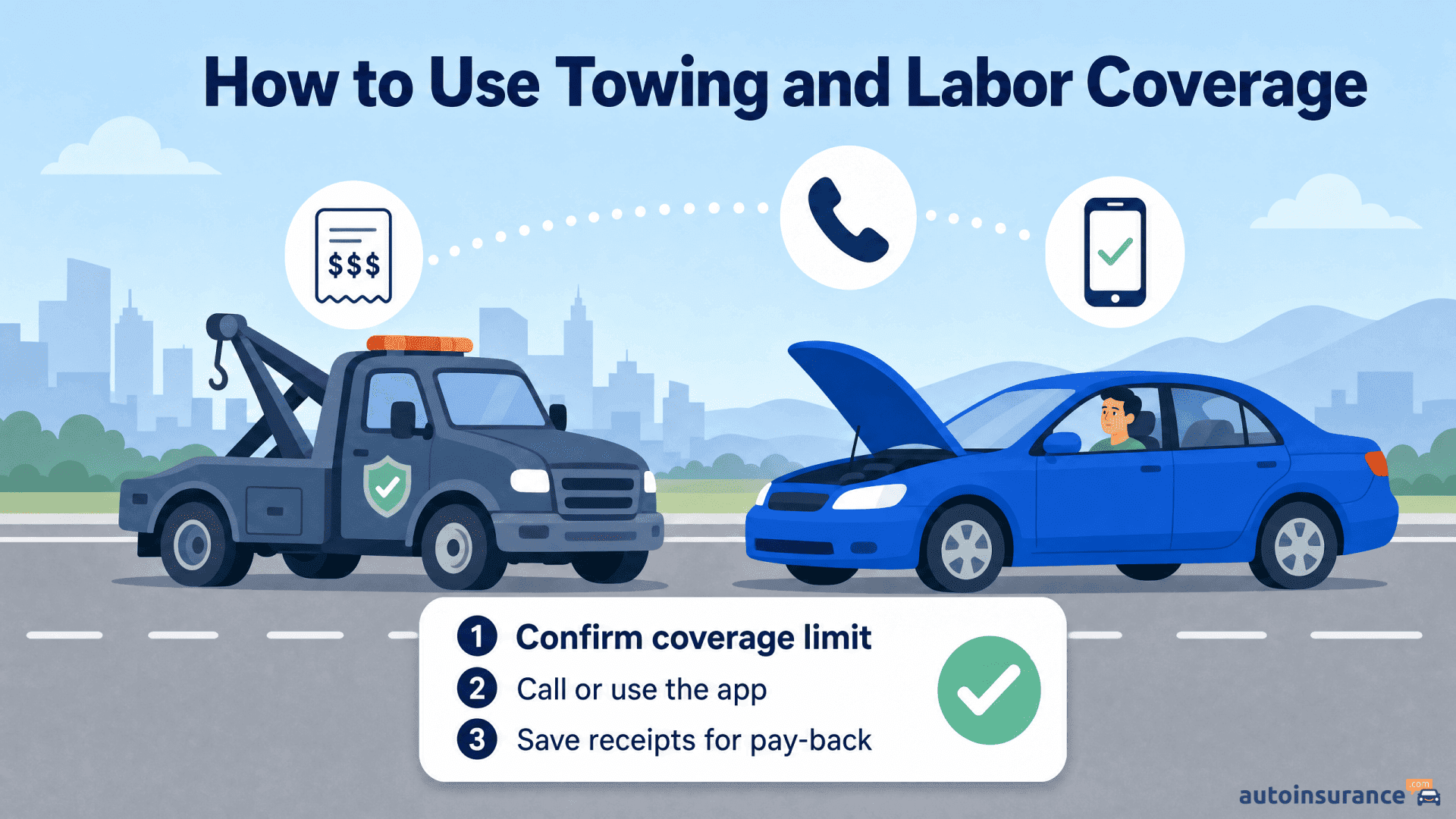
Contact your insurance provider and verify your coverage limits before requesting roadside assistance for your vehicle.
If your vehicle breaks down and you need roadside assistance, you can contact your insurer immediately if you have towing and labor coverage. You can either call the number listed on your insurance card or, if supported, request assistance through its website or mobile app. Depending on the insurer, it may dispatch a roadside service provider directly or require you to pay for the service and submit a request for reimbursement.
Before arranging your own tow or roadside service, check whether your insurer requires you to use a specific provider or obtain authorization. You should also confirm your coverage limit before requesting service so you know how much you may have to pay yourself.
TIP:
If you pay out of pocket, keep your receipt and any other documentation you may need to submit for reimbursement.
Towing and Labor Coverage vs. Roadside Assistance
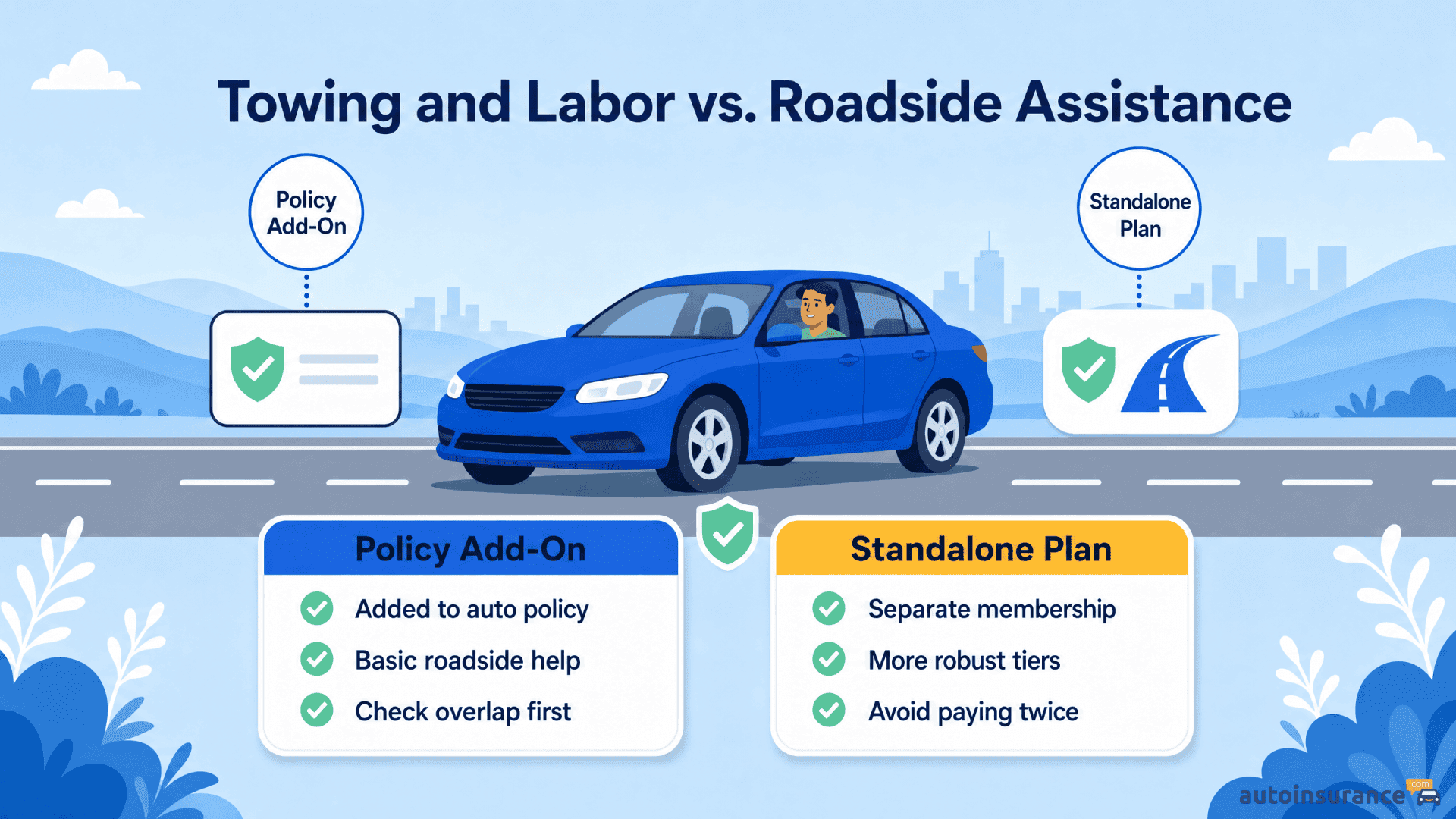
Evaluate your existing roadside assistance benefits to avoid paying for redundant auto insurance coverage.
When comparing car insurance companies, you may come across both towing and labor coverage and roadside assistance, along with other terms like emergency road service. These terms are mostly used interchangeably and refer to coverage for similar roadside services. Which one you’ll see depends on the insurer. For example, Nationwide has towing and labor coverage, State Farm has emergency road service coverage, and Travelers has roadside assistance.
The main distinction is between these auto insurance add-ons and standalone roadside assistance programs offered by providers such as AAA.
Standalone roadside assistance programs are not auto policy add-ons, and as such, they follow you as the member rather than the insured vehicle. That means you can get AAA roadside assistance if you’re driving a car other than the one on your insurance policy.
Higher AAA tiers can also provide more robust coverage than most auto policies, though some insurers, such as Travelers, have more than one roadside assistance tier for those who want more coverage.
The following table shows an overview of the coverage offered by some popular roadside assistance options.
| Category | GEICO Emergency Roadside Service | Travelers Roadside Assistance | Travelers Premier Roadside Assistance | AAA Classic | AAA Plus | AAA Premier |
| Towing limit | 15 miles | 15 miles | 100 miles | 5 miles | 100 miles | One tow up to 200 miles, then 100-mile limit |
| Lockout service limit | $100 | Not advertised | Not advertised | $60 | $100 | $150 |
| Cost of fuel included | No | No | No | No | Yes | Yes |
If you already have roadside assistance, review its benefits before adding towing and labor coverage to your auto insurance policy. Paying for both may not provide enough additional value to justify the extra cost.
Does Using Towing and Labor Coverage Raise Your Insurance Rates?
Using towing and labor coverage usually doesn’t affect your auto policy the same way filing a claim can. Different insurers may have different policies regarding roadside assistance claims, particularly if you make frequent service requests. Check with your insurer to confirm whether using the coverage could affect your premiums or eligibility for the coverage in the future.
Is Towing and Labor Coverage Worth It?
If you don’t already have roadside assistance coverage through a different service, towing and labor coverage may be worth considering, particularly if you want protection against unexpected towing and roadside service costs. The coverage is generally inexpensive, but its value depends on the limits and services included in your policy.
Check how much it will add to your policy before committing, as well as whether your insurer has any requirements for adding this coverage that would change whether it’s worth it for you. For example, Nationwide requires drivers to have comprehensive coverage in order to add towing and labor coverage.
Recap
Towing and labor coverage can be a worthwhile add-on that helps pay for expenses associated with unexpected breakdowns, such as towing and minor services such as jump-starts, flat-tire changes, and fuel delivery. However, coverage limits and eligible services vary by insurer, so check your policy to understand what is included and how much it will pay.
This coverage is generally inexpensive, but it may not be necessary if you already have roadside assistance through another provider, drive infrequently, or don’t mind paying for towing and related services out of pocket.
Frequently Asked Questions
Towing and labor coverage covers roadside services needed when your vehicle breaks down. Common covered services include towing to a repair facility, jump-starting a dead battery, changing a flat tire, fuel delivery, and lockout service.
The towing distance covered by car insurance varies by insurer and policy. Some towing and labor policies cover a specific number of miles, while others provide a dollar limit toward the cost of a tow. Check your policy’s towing limit to see how far your insurer will tow your vehicle and how much it will pay toward the service. Any costs that exceed the policy’s limit will be your responsibility.
To get towing covered by insurance, you generally need to have towing and labor coverage or another roadside assistance benefit on your policy. Some insurers may include some towing coverage automatically, but in most cases, it’s a coverage you must add. However, it tends to be very affordable.
Roadside assistance does not cover car repairs or replacement parts once the car is delivered to the repair shop. For example, it may cover towing a vehicle with a flat tire but not the cost of a new tire. Coverage may also have limits on towing distance, service calls, or the amount the provider will pay. Check your specific policy or roadside assistance plan for exclusions and coverage limits.
Related Articles
The Best Roadside Assistance You’ve Never Heard Of
December 12, 2024
Direct Auto Car Insurance Review 2026
July 9, 2026