




Last updated: August 28, 2025
What Is an Insurance Declarations Page?
And where can you find the summary of your car insurance policy?
Get quotes from providers in your area
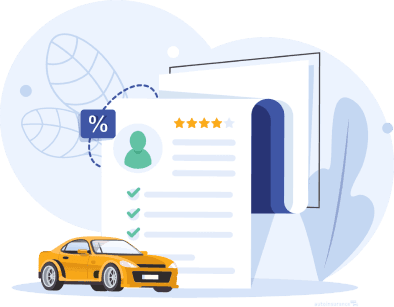

Your insurance declarations page—also called a dec page or policy declarations page—is a summary of your car insurance policy. It includes key details like who and what is covered, your coverage types and limits, deductibles, premium amount, and policy period.

Find out if you're overpaying for auto insurance.
See how much you could be saving! Let's get started by entering your ZIP Code:
Where Can I Find My Insurance Declarations Page?
You can typically find your insurance declarations page:
- At the beginning of your printed insurance policy
- In your online account through your insurer’s website or mobile app
What Does a Declarations Page Include?
An auto insurance declarations page outlines the most important information in your policy, such as:
- Policyholder information: Your name, address, and policy number
- Vehicles covered: Vehicle descriptions including VIN, make, model, and year
- Coverage types and limits: Bodily injury, property damage, comprehensive, collision, uninsured motorist, etc.
- Deductibles: The amount you pay out-of-pocket before your insurance kicks in
- Policy period: Start and end dates of your policy, usually 6- or 12-month periods
- Premium: Your total car insurance cost over your 6-12 month policy period
- Discounts: Any discounts applied to your policy
- Endorsements: Any added or adjusted coverages, also known as riders (e.g., a rideshare endorsement)
- Loss payees or additional insureds: People or entities also covered by the policy
- Rating and underwriting info: How your risk and premium are calculated
- Agent contact details and annual mileage estimates
This summary helps you quickly understand the essentials of your policy without reading through the full contract.
Understanding and Using Your Policy's Declarations (Dec) Page Effectively
Here are a few practical steps to review and using your declarations page:
- Regularly Update Your Records: Whenever you receive a new auto insurance declarations page (usually when you buy or renew your policy), save both digital and paper copies, that way you can easily reference if an issue comes up.
- Verify All Information Promptly: Double check that your personal and vehicle information, coverage types, and limits match your expectations. If you notice discrepancies, contact your agent to correct the error.
- Resolve Claims and Policy Questions: If a claim arises or you need to clarify coverage (e.g., primary vs. secondary coverage), your declarations page is a helpful reference. While it doesn’t list all exclusions, having your deductibles and limits available is useful when working with agents or adjusters.
- Prepare for Major Life or Vehicle Changes: Use your declarations page to confirm that new vehicles, drivers, or changes in your household are correctly reflected. Request and review an updated page after any significant policy adjustment.
Avoid Common Pitfalls
- Don’t rely on the full policy document for legal definitions, exclusions, and detailed conditions—your auto insurance declarations page is a summary, not the final word on coverage.
- Don’t use your declarations page as proof of insurance for law enforcement or at the DMV; use your official insurance ID card instead.
What’s Not Included on a Declarations Page?
While the declarations page is a useful summary, it does not include:
- Full policy details and definitions
- A comprehensive list of coverage exclusions
- Legal explanations or your insurance ID card (used for proof of coverage)
To get this information, you’ll need to read the full policy document.
Why You Might Need Your Declarations Page
You may need to access your insurance declarations page when:
- Buying a new car
- Shopping for a new insurance policy and comparing coverages
- Verifying your existing insurance details
NOTE
You can’t use your declarations page as proof of insurance during a traffic stop. Use your insurance ID card instead—either digital or printed.
Insurance Declarations Page vs. Full Insurance Policy
A declarations page is just one part of your full car insurance policy. While it gives a summary, your complete policy includes:
- Coverage forms
- Causes of loss or exclusions
- Policy conditions and definitions
- Your insurance ID card
Think of the declarations page as the “table of contents” for your coverage—it gives you the highlights, but not the whole story.
Conclusion
Your declarations page is a quick overview of your coverage and helps you compare or update your insurance when needed. Make sure you have it handy in a place that’s easy to find, and contact your provider if anything looks off or if you need help understanding your coverage.
Citations
What Is an Insurance Declarations Page? American Insurance Family. (2022).
https://www.amfam.com/resources/articles/understanding-insurance/declaration-page.Liability Insurance. Progressive. (2022).
https://www.progressivecommercial.com/coverages/liability/.Rating. IRMI. (2022).
https://www.irmi.com/term/insurance-definitions/rating.Insurance 101: What is an Insurance Endorsement or Rider? Louisiana Department of Insurance. (2022).
https://www.ldi.la.gov/docs/default-source/documents/publicaffairs/january-insurance-101-endorsement-or-rider.pdfWhat is an auto insurance declarations page? Allstate. (2019, June).
https://www.allstate.com/resources/car-insurance/car-insurance-declarations-page.Exclusions: What your policy won’t cover. Nasdaq. (2013, June 28).
https://www.nasdaq.com/articles/exclusions
Related Articles
Direct Auto Car Insurance Review 2026
April 23, 2026
Acts of God in Car Insurance
July 1, 2025
How Much Is a Wrecked Car Worth?
August 28, 2025