
 866-589-5339





Electric Trucks/SUVs: Insurance & Ownership Cost Guide
On average, electric trucks and SUVs cost more to buy and insure than their gas-powered counterparts, but drivers save on fuel costs.
Get quotes from providers in your area

Discover rates as low as $24 /month


Last updated: July 8, 2026
Key Takeaways: EV Trucks & SUVs Ownership Guide
On average, electric vehicles cost more to insure than gas cars, with electric SUVs and trucks tending to fall on the higher end. Drivers save long-term with lower fuel costs.
The least expensive electric truck/SUV to insure is the Ford F-150 Lightning at $2,770/year. The most expensive is the Tesla Model X at $4,173/year.
On average, an electric pickup truck costs $1,685/year to maintain, while a medium electric SUV costs $1,632/year.
Electric SUVs and trucks also tend to cost more to charge than smaller vehicles due to decreased energy efficiency.

Most people haven't compared rates in over a year.
Rates change constantly. A quick comparison takes 2 minutes and could put hundreds of dollars back in your pocket.
While electric trucks and SUVs aren’t as widespread as other types of electric cars, they are becoming more popular. The first mainstream electric SUV was the Tesla Model X, which launched in 2015 and was recently discontinued. Meanwhile, Rivian was the first company to mass-produce consumer electric trucks, launching the R1T in 2021.
As with any vehicle, the purchase price is only part of the total cost of ownership. Drivers in the market for a new car should also consider the cost of maintenance, insurance, depreciation, and, with EVs, charging. This guide provides an overview of the main factors to keep in mind when shopping for an electric truck or SUV.
Electric Trucks and SUVs Are More Expensive to Insure
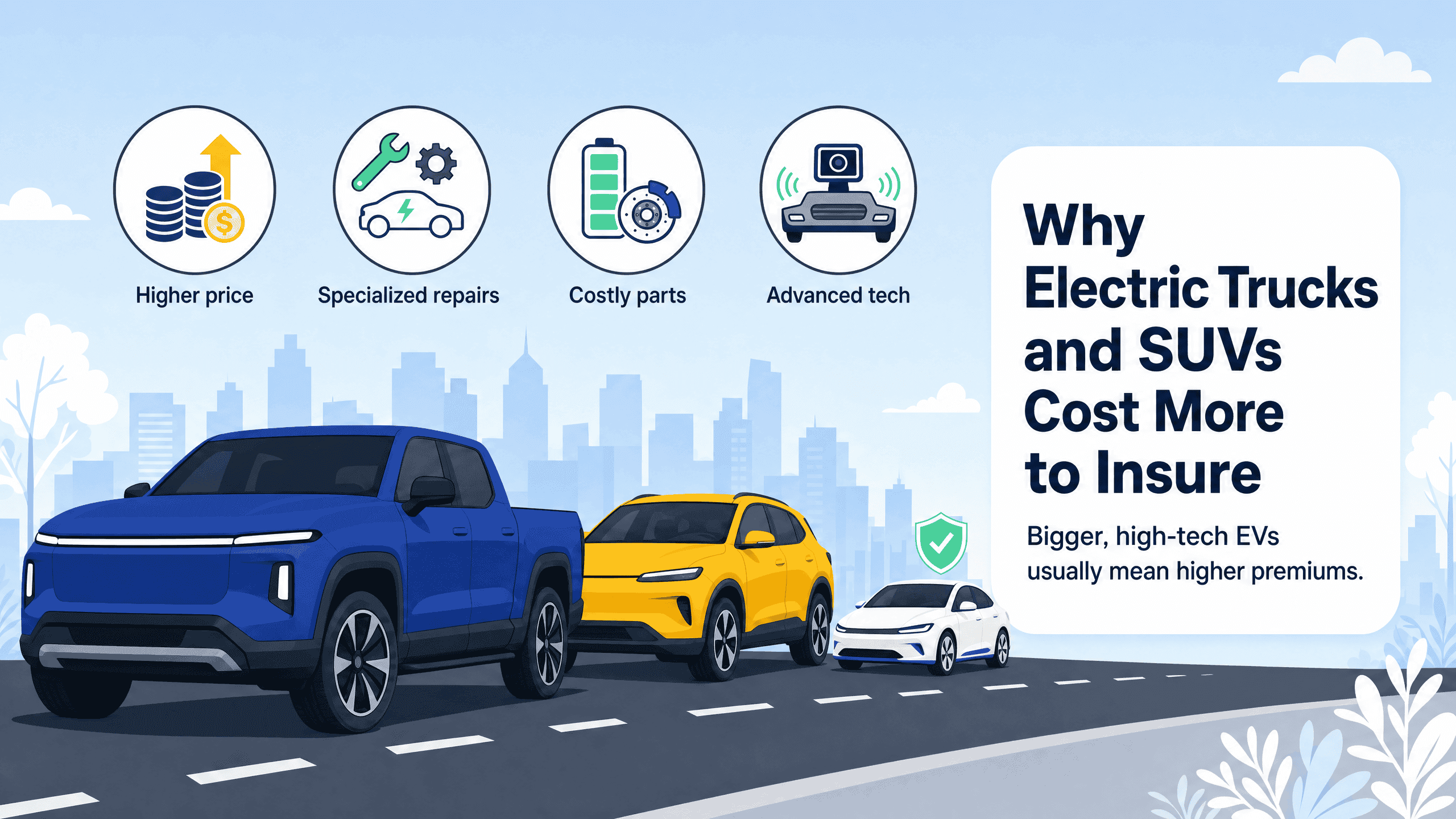
Factors like specialized repairs and expensive parts cause electric trucks and SUVs to have higher insurance premiums.
In general, EVs cost more to insure than comparable gas-powered models because they tend to be more expensive to repair or replace after an accident. The average cost to insure an EV is $3,655 annually, compared to $2,356 for all vehicle types.
| Category | Annual average insurance cost | Monthly average insurance cost |
| All vehicle types | $2,356 | $196 |
| Electric vehicles only | $3,655 | $305 |
In the same way that SUVs and pickups are more expensive to insure than sedans, on average, electric trucks and SUVs are more expensive to insure than smaller EVs within the same make.
For example, the average annual premium for a Tesla Model 3 is $3,512, while the average rate for a Cybertruck is $4,028. (However, Teslas are overall expensive to insure, and the average cost of insurance for a Model 3 is higher than for several electric SUVs.)
While premiums vary based on the exact vehicle, driver, and insurance company, several factors contribute to the higher insurance costs associated with electric trucks and SUVs:
- Higher purchase prices: Electric trucks and SUVs generally have higher sticker prices than their gasoline counterparts and electric sedans. Since insurers consider a vehicle’s replacement value when determining premiums, more expensive vehicles usually cost more to insure.
- Specialized repairs: Repairing an electric vehicle typically requires technicians with specialized training and equipment. Depending on the area, there may be fewer certified repair facilities capable of servicing electric trucks and SUVs, which can increase labor costs and extend repair times.
- Expensive batteries and parts: EV batteries are usually built to last at least eight years, but damage to the battery pack as a result of a collision can require costly repairs or even a full replacement, increasing potential claim costs for insurers. In addition, many electric trucks and SUVs use unique body panels, specialized electronics, and manufacturer-specific components that can be more expensive or harder to source than parts for traditional vehicles, which also drives up insurance premiums.
- Advanced technology: Electric trucks and SUVs come equipped with advanced driver assistance systems, including cameras, radar sensors, and other sophisticated technology. These features can increase repair costs as they often require recalibration or replacement after a collision.
The best insurance companies for electric vehicles, including trucks and SUVs, still offer affordable premiums as well as EV-specific discounts and coverages.
Cheapest (and Most Expensive) Electric Trucks and SUVs to Insure
Insurance costs for electric trucks and SUVs can vary widely depending on the model. The models with the lowest average premium in our pricing data are the Hyundai Ioniq 5 at $2,663 per year ($222 per month) and the Ford F-150 Lightning at $2,770 per year ($231 per month). The Kia EV6 ($2,798 annually) and Kia EV9 ($3,246 annually) also ranked among the least expensive options.
The Tesla Cybertruck and Model X are the most expensive to insure at $4,028 and $4,173, respectively.
TIP:
Drivers shopping for an electric truck or SUV should always compare quotes from multiple insurers, as rates can vary significantly based on the vehicle, location, driving history, and selected coverage.
| Vehicle Make and Model | Annual average premium | Monthly average premium |
|---|---|---|
| Hyundai Ioniq 5 | $2,663 | $222 |
| Ford F-150 Lightning | $2,770 | $231 |
| Kia EV6 | $2,798 | $233 |
| Kia EV9 | $3,246 | $271 |
| Rivian R1T | $3,391 | $283 |
| Tesla Model Y | $3,614 | $301 |
| Rivian R1S | $3,840 | $320 |
| Tesla Cybertruck | $4,028 | $336 |
| Tesla Model X | $4,173 | $348 |
Other Ownership Costs for Electric Trucks and SUVs
Beyond insurance, there are various other costs to take into account when looking at electric trucks and SUVs, starting with, of course, the purchase price. Additional long-term ownership costs, including charging and maintenance, are also important expenses to keep in mind and can vary between models. Understanding these costs can help you choose a vehicle that fits both your driving needs and your budget.
Purchase Price
Electric trucks and SUVs generally have higher MSRPs than smaller electric cars. At the lower end, basic trims of the Kia EV6 and Tesla Model Y start below $50,000, while luxury models such as the Tesla Model X and GMC Hummer EV can exceed $85,000. Aside from being a significant upfront cost, a higher purchase price often leads to higher insurance premiums and depreciation costs, making it an important factor when calculating the total cost of ownership.
Here are the starting MSRPs for some popular electric truck and SUV models:
| Vehicle Make and Model | Starting MSRP |
|---|---|
| Hyundai Ioniq 5 | $35,000 |
| Kia EV6 | $42,900 |
| Tesla Model Y | $44,990 |
| Kia EV9 | $54,900 |
| Ford F-150 Lightning | $62,995 |
| Rivian R1T | $69,900 |
| Tesla Cybertruck | $69,990 |
| Rivian R1S | $75,900 |
| Tesla Model X | $84,990 |
Charging Costs
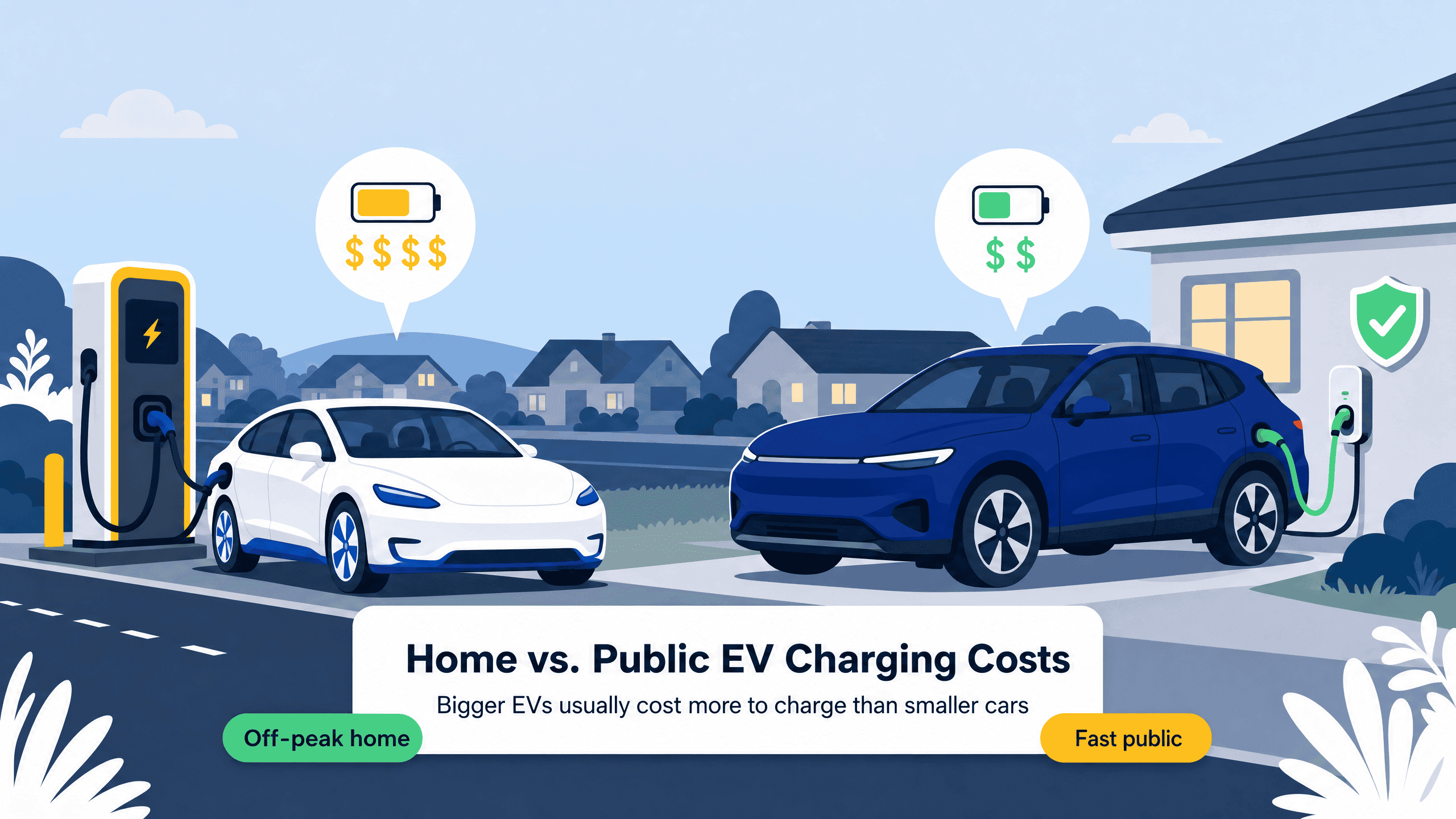
Charging an electric vehicle at home is typically more cost effective than using public charging stations.
One of the main advantages of owning an electric vehicle is the potential to save on gas. This is particularly true if you have an at-home charging setup and charge during off-peak electricity hours. Drivers who rely primarily on public DC fast chargers typically spend more on electricity than those who charge at home. Your annual charging costs will depend on electricity prices in your area, how much you drive, and your charging habits.
However, just like how gas-powered SUVs are less efficient and therefore cost more to fuel than smaller cars, the same is true of their electric counterparts. For example, Tesla’s charging calculator shows that the average monthly charging cost for a Model 3, based on 35 miles of daily driving, is $48.70.1 Meanwhile, the average monthly charging cost for a Model X for the same mileage is $63.31. That comes out to a difference of roughly $200 over a full year.
This calculator uses the national average cost of residential electricity, which is currently $0.18 per kilowatt-hour, but exact costs may be higher or lower depending on your location.2 However, you can generally expect to pay more to charge an SUV or truck than you would for a sedan.
Maintenance Costs
Another benefit of electric vehicles is that they require less routine maintenance than gas-powered vehicles because they have fewer moving parts. For example, they don’t require tune-ups like oil changes, spark plug replacements, or many of the engine services associated with ICE (internal combustion engine) cars.
However, EV owners will still need to budget for certain maintenance items like tire rotations and replacements, brake fluid changes, and cabin air filter replacements. When it comes to electric trucks and SUVs specifically, maintenance costs are often slightly higher than for electric sedans due to their larger size and weight, which can put added strain on tires and other components.
According to data from AAA, the cost to maintain an electric pickup truck is $1,685 annually, compared to $1,358 for an electric sedan.3 These amounts assume a mileage of 15,000 miles per year.
| Vehicle type | Annual maintenance costs (based on 15,000 miles per year) |
|---|---|
| Electric truck | $1,685 |
| Electric medium SUV | $1,632 |
| Electric compact SUV | $1,449 |
| Electric sedan | $1,358 |
Depreciation
Like all vehicles, electric trucks and SUVs lose value over time. Depreciation varies by model and can be influenced by factors such as battery technology, market demand, incentives on new vehicles, and resale values. Buyers planning to keep their vehicle for only a few years should consider how depreciation may affect the vehicle’s long-term value alongside insurance and maintenance costs.
When comparing electric trucks and SUVs, it’s important to look beyond the sticker price. Considering the full cost of ownership—including insurance, charging, maintenance, repairs, and depreciation—can provide a more accurate picture of what you’ll spend over the life of the vehicle.
| Vehicle type | Annual depreciation |
|---|---|
| Electric truck | $8,324 |
| Electric medium SUV | $5,936 |
| Electric compact SUV | $4,960 |
| Electric sedan | $7,088 |
RELATED:
Learn more about whether a gas car or EV will be cheaper for you to own.
Tips to Reduce Costs for Electric Trucks and SUVs
There are several ways to lower the cost of owning an electric truck or SUV:
- Compare insurance quotes. Getting quotes from at least three insurance providers will help you find the most competitive rate.
- Bundle your insurance policies. Bundling auto with other policy types, especially home insurance, can provide significant discounts.
- Charge at home whenever possible. At-home charging, especially during off-peak hours, is much cheaper than relying primarily on public charging.
- Keep up with routine maintenance: Even though EVs require less maintenance than gas cars, there are still certain items to take care of, including tire rotations and wheel alignments. Keeping to a maintenance schedule will help extend tire life and maintain efficiency, as well as reduce the risk of unexpected repairs.
- Take advantage of available incentives. Federal EV incentives expired in September 2025, but several states still offer rebates for EV purchases and leases. In addition, utility companies around the country offer discounts and incentives for at-home charging.
Recap
Electric trucks and SUVs typically cost more to insure than smaller EVs because they have higher purchase prices, larger battery packs, and more expensive repair costs. While they generally require less routine maintenance than gas-powered vehicles, there is still some required, and owners should also factor in expenses such as insurance, charging, and depreciation when comparing models.
Evaluating the total cost of ownership will vary based on personal driving habits and vehicle model. Consider how much you plan to drive the EV, where you plan to charge it, your local electricity costs, and the insurance quotes you receive.
Frequently Asked Questions
Yes, EV trucks are more expensive to insure, on average, than other types of vehicles. In general, EVs tend to be more expensive to insure than gas cars, and trucks cost more to insure than other vehicle types because of their higher purchase prices and more costly repairs.
The 80 percent rule refers to the general recommendation that EV owners limit charging to about 80 percent of the battery’s capacity. Keeping the battery between roughly 20 and 80 percent for daily driving can help reduce long-term battery degradation. Charging to 100 percent is usually fine when you need the extra range for a road trip, but it’s not necessary for most daily commutes.
There is not much data on the single most stolen EV because, in general, electric vehicles are stolen less frequently than gasoline-powered vehicles. Many include advanced security features such as GPS tracking, smartphone monitoring, and remote vehicle controls.
For many drivers, it is cheaper to own an electric car than a gas car. Although electric vehicles often have higher purchase prices, they typically cost less to fuel and require less routine maintenance than gas-powered vehicles. However, whether an EV is cheaper to own overall depends on individual factors such as insurance premiums, electricity rates, purchase incentives, depreciation, and how much you drive.
Sources
Charging Calculator. Tesla. (2026).
https://www.tesla.com/charging-calculatorElectric Power Monthly. eia. (2026, Apr).
https://www.eia.gov/electricity/monthly/epm_table_grapher.php?t=epmt_5_6_aYour Driving Costs. AAA Newsroom. (2025).
https://newsroom.aaa.com/wp-content/uploads/2025/09/AAA-Brochure-Your-Driving-Cost-9.2025.pdf
Related Articles
How Much Does the Average Car Weigh?
August 13, 2026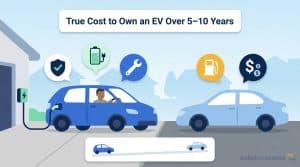

Leased Vehicles Coverage: Will I Pay More?
July 31, 2026