
 866-589-5339





7 Signs It’s Time to Switch Car Insurance Companies (Beyond Price)
Claims handling, customer service, and coverage options are all reasons your car insurance company may not be a good fit beyond the cost.
Get quotes from providers in your area

Discover rates as low as $24 /month

Last updated: September 18, 2026
Key Takeaways: When to Switch Car Insurance Companies
There are several reasons, beyond price, when drivers may want to consider shopping around for a new car insurance policy.
Claims handling and customer service are important factors in your experience as a policyholder — if either is consistently subpar, switching insurers can be beneficial.
Major life changes like moving or getting married can impact your car insurance and are a good time to review your options.
You may need to switch insurance companies if your coverage needs change and can no longer be accommodated by your insurer.
While a rate increase can be a major factor that pushes drivers to shop around for other insurance policies, cost isn’t the only reason to reconsider an insurer. An unsatisfactory claims handling experience, a change in your coverage needs, or consistently poor interactions with customer support are just some of the other reasons you may want to switch car insurance companies.
Here are some of the main situations when it may make sense to look for a new insurance provider.
1. Poor Claims Experience
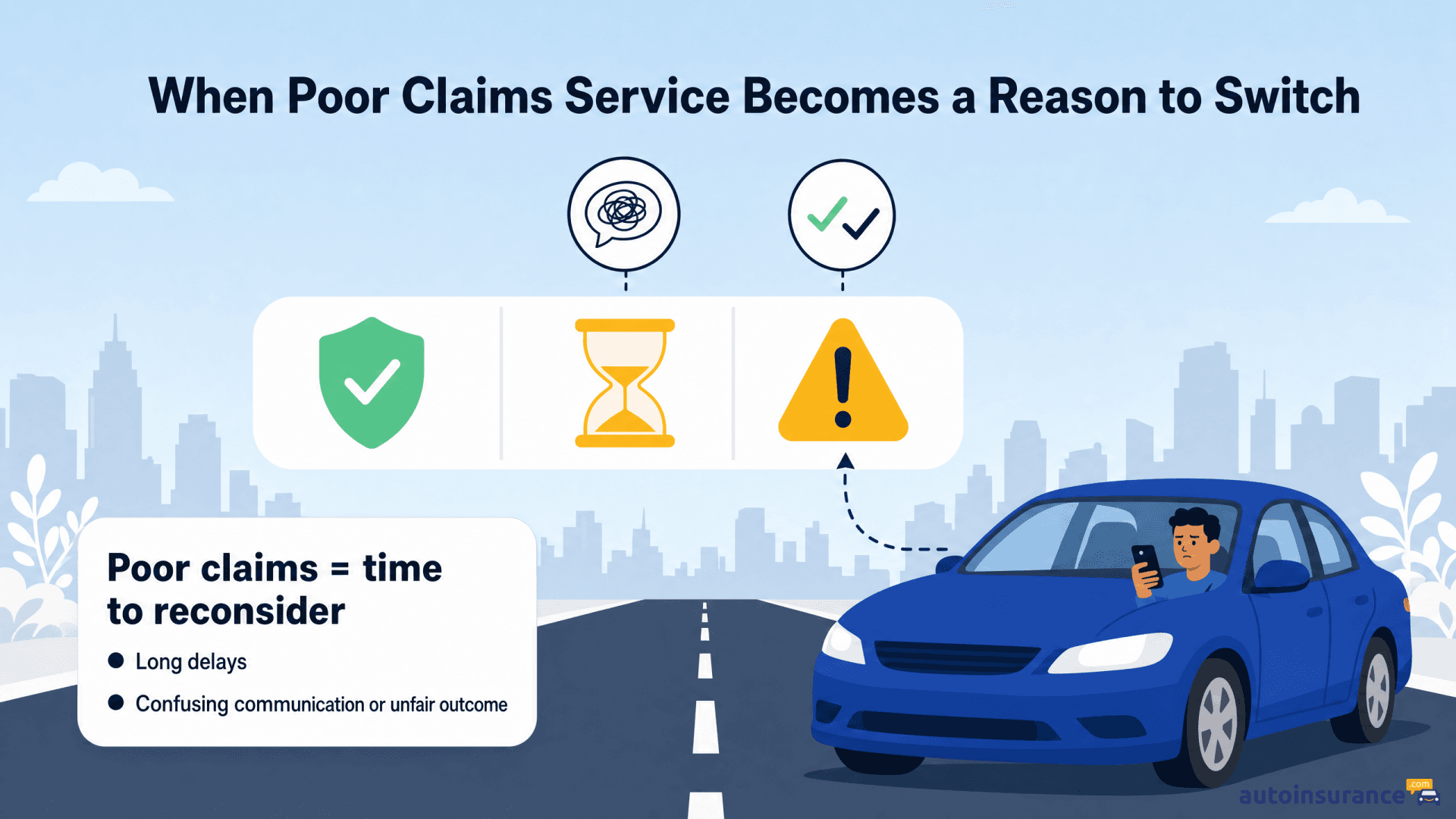
A poor claims experience involving long delays or bad communication is a common reason to consider switching your insurance provider.
Filing a claim is one of the most important times to evaluate your insurer — an efficient and fair claims handling process is the marker of a great insurer. On the other hand, if you end up needing to file a claim and have a subpar experience, you may consider leaving your insurer. While a single less-than-ideal experience may not necessarily warrant switching, a particularly poor experience or a pattern of problems can be a reason to switch.
A poor claims experience may include an unusually long resolution time, inconsistent or difficult communication with the insurer throughout the process, or a disagreement with how the claim was handled or settled.
We’ve reviewed the best companies for claims satisfaction.
2. Bad Customer Service
Another important factor to consider when evaluating your insurer is the customer service you receive. This includes how easy it is to reach someone when you need help or have a question, how seamless it is to manage your policy day to day, and whether the insurer supports your preferred way of interacting with the company. Some drivers prefer dealing primarily with an agent, while others want to manage everything online.
A few customer service hiccups may not be worth switching insurers over, particularly if you’re happy with your coverage and premium. However, if customer service is important to you and you’ve experienced persistent issues like long wait times, poor problem resolution, or glitchy digital tools, it may be worthwhile to see what other options are available.
We’ve also reviewed the best companies for customer service.
3. Changing Coverage Needs
It’s a good idea to regularly review your coverage to make sure you’re not paying for coverage you no longer need and that you have sufficient protection for your current situation. There may be nothing wrong with your current insurer, but your circumstances can change in ways that make another company a better fit.
For example, if you recently purchased a classic car or became a rideshare driver, you may need specialized coverage that your current insurer doesn’t offer. If you start driving significantly less, a pay-per-mile policy may be a better fit and could be worth switching for.
Any time your insurance needs change — such as when you add a vehicle or driver, remove a driver, or significantly change how you use your vehicle — review your coverage and consider whether your current insurer still offers the right combination of coverage, service, and price.
KEEP IN MIND
Your insurer may offer more coverage options than you’re currently using. Before switching because you need a new type of coverage, ask your current insurer whether it offers the protection you’re looking for.
4. Subpar Digital Tools
For drivers who prefer to manage their insurance online, a poor digital experience can be a legitimate reason to consider switching insurers. Your insurer’s website or app should make routine tasks such as viewing policy documents, making payments, updating coverage and accessing insurance cards relatively straightforward.
Some insurers have very limited digital capabilities, which may be fine if it’s not important to you. However, if you’re often feeling frustrated by an app or platform that frequently crashes, makes basic tasks difficult, provides limited claims functionality, or requires you to call for tasks you would prefer to handle online, you may want to see what other insurers offer.
5. Major Life Changes
Some big life events may be a good time to review your car insurance and consider whether your current insurer still meets your needs. For example, if you’re moving to a new state, you may find that your current insurer doesn’t operate where you’re going. Even if it does, it may cost significantly more or provide more limited coverage.
Adding another driver to your policy, particularly a teen, can also affect your rates and discounts and may change the coverage or features you want from your insurer. If you recently purchased a home, you are likely eligible for bundling discounts, which may be more significant with a different insurer. You’ll also want to check that the insurer has good customer service ratings for home insurance in addition to car insurance.
6. Deteriorating Financial Strength
An insurer’s financial strength indicates its ability to meet its financial obligations, including paying out claims. If your insurer’s financial strength rating has recently declined, it’s worth paying attention to.
You can check financial strength ratings from independent rating agencies like AM Best. A minor rating change isn’t uncommon and isn’t necessarily concerning if the insurer remains in good financial standing overall. However, a significant or ongoing decline may be a reason to consider switching companies, particularly if you’re already experiencing other problems, such as claims delays or difficulty getting issues resolved.
7. Your Insurer Lacks Transparency
Transparency from your insurer is important, particularly when your circumstances change or you receive a significant renewal increase. You should be able to get a clear explanation of your coverage, premium, and major policy decisions from your insurer. If you’re not able to get clear answers about why your rate increased, how a claim was evaluated, or why coverage was denied, it’s reasonable to consider other options.
How to Switch Car Insurance Companies
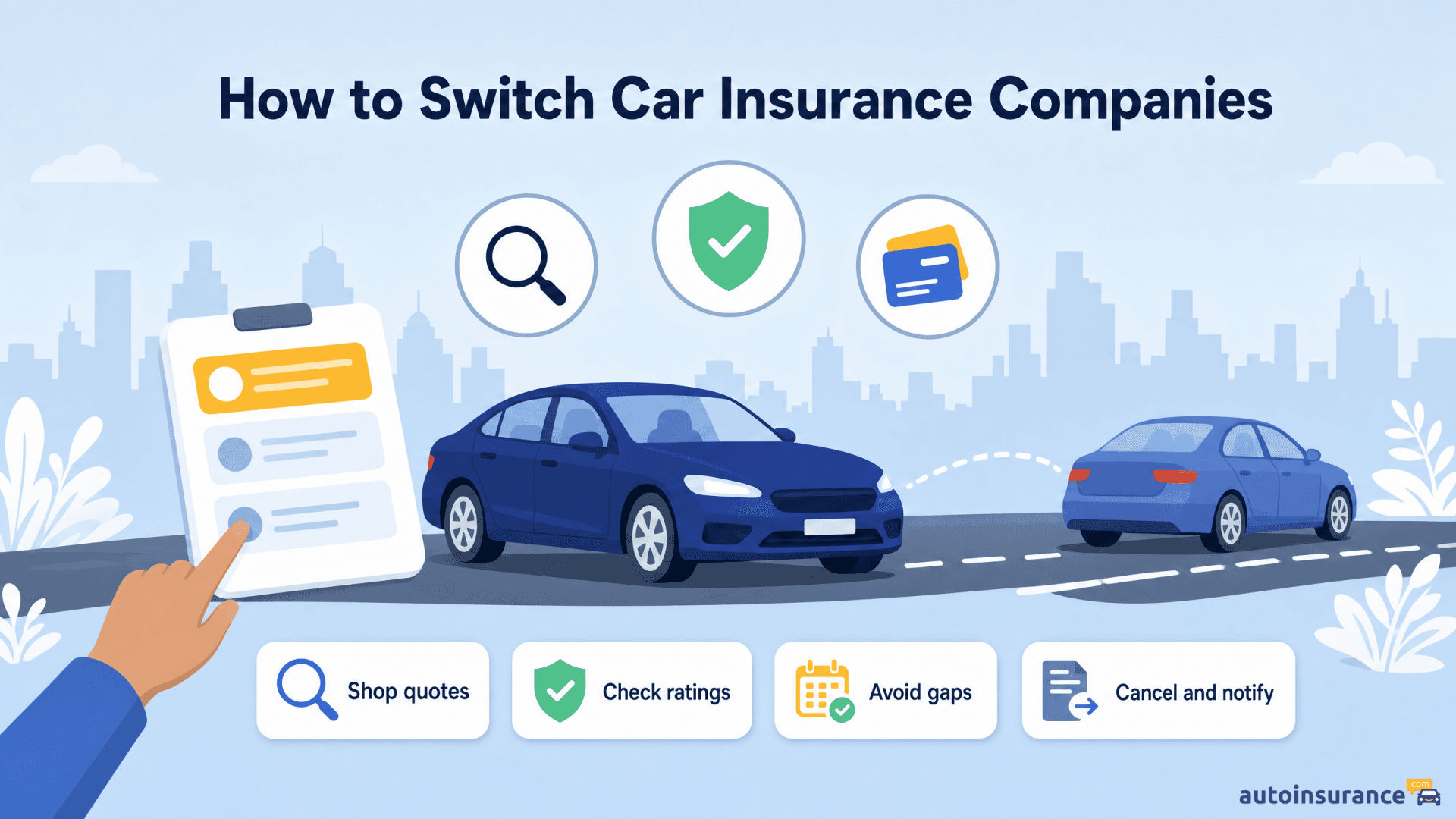
Follow these simple steps to transition to a new car insurance carrier without any coverage lapses.
If you decide to start looking for another insurer and potentially switch carriers, here’s how to go about it.
- Shop around with several companies. Get quotes from at least three other providers for the coverage you need. Keep in mind that if you’re looking for different coverage than what you currently have, you won’t be able to directly compare the rates to your current premium since coverage affects what you pay.
- Confirm the new company meets your needs. Consider the main reason you decided to leave your current insurer and research the companies you’re interested in to verify the reasonable likelihood that it will be an improvement. For example, if you had poor claims experiences, check resources like J.D. Power and the CRASH Network and prioritize companies with high claims handling ratings.
- Avoid a lapse in coverage. Letting your policy lapse, even briefly, can lead to higher premiums. Whenever you switch car insurance companies, make sure that your new policy takes effect before you cancel your current one. It’s fine to have some overlap, but you want to avoid a gap.
- Cancel your current policy. Contact your current insurer to cancel your policy. Some companies may require you to call, while others may allow you to cancel online. It’s a good idea to send your cancellation request in writing, if possible, so you have a written record. If your policy is not yet up for renewal, you should also confirm whether you will receive a prorated refund.
- Notify relevant parties. If you lease or finance your vehicle, make sure your new insurer has the correct lender or leasing company listed on your policy. You may also need to provide proof of your new insurance to the lender or leasing company.
Recap
Cost is very important when considering car insurance policies, but switching companies isn’t always about finding a lower rate. There are several reasons it may make sense to consider other options, including a poor claims experience, frustrating customer service, and inadequate coverage. Major life changes, such as moving to a new state or adding a driver to your policy, can also be a good opportunity to reevaluate whether your insurer is still a good fit.
If you’re considering changing providers, shop around and compare coverage options, claims handling records, customer satisfaction scores, complaint data, and financial strength ratings to make sure you find the best fit. Always make sure your new policy is in effect before cancelling your current one.
Frequently Asked Questions
If you’re ready to switch car insurance companies, there is no set time you need to wait. Your renewal date may be a convenient time to change insurers, but you can generally switch at any time. If you switch mid-policy, make sure your new coverage starts before canceling your existing policy to avoid a lapse.
Whether $300 is too much depends on factors such as your location, driving record, vehicle, coverage limits and deductible. The national monthly average for full coverage is $196, but the monthly average in expensive cities like New Orleans is much higher than $300.
Switching car insurance companies can be a good idea if you can find better coverage, service or value elsewhere. However, switching isn’t always necessary if you’re satisfied with your current insurer. Always compare quotes from multiple companies before deciding.
Switching insurers can result in a coverage gap, higher deductibles, or the loss of discounts you had with your current company. You may also find that a new insurer offers lower rates but less satisfactory claims handling or customer service. Compare coverage as well as price, and make sure your new policy is active before canceling your existing one.
Related Articles

Should I Switch Car Insurance After a Rate Increase?
August 17, 2026

The Best Time to Buy Car Insurance
July 25, 2025